



Best Burr Coffee Grinder in 2026: For Brewing Everything From Pour-Over Coffee to Espresso
Looking to up your coffee game in 2026? You're gonna need the best burr coffee grinder for your brewing style. Do you know how to decide which coffee grinder is the best for you? Let me show you.
28+
Coffee Grinders Reviewed
20+
LBS of Coffee Beans Used
80+
Hours of Testing
 Still reigns supreme Rugged and durable Elegant design Nitro blade burrs Very expensive View offer ! This article contains affiliate links | 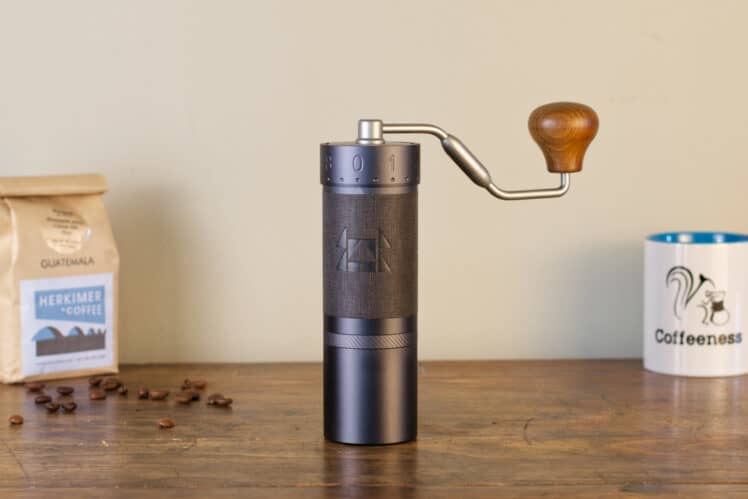 A champion among hand grinders 48mm titanium coated stainless steel burrs Staggering amount of grind settings Magnetic catch cup Comandante might be worried View offer ! This article contains affiliate links |  The Baratza Sette 270Wi -- my favorite grinder for espresso Unique design with “brains” Up to 270 grind settings Very easy operation Some find the weighing feature “error-prone” View offer ! This article contains affiliate links | 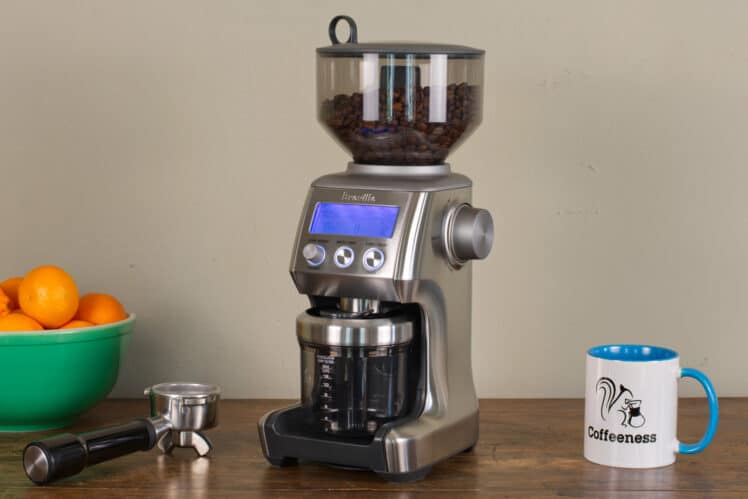 Great value for money 60 grind settings Suitable for espresso Large LCD display Not great for coarser grind sizes View offer ! This article contains affiliate links | 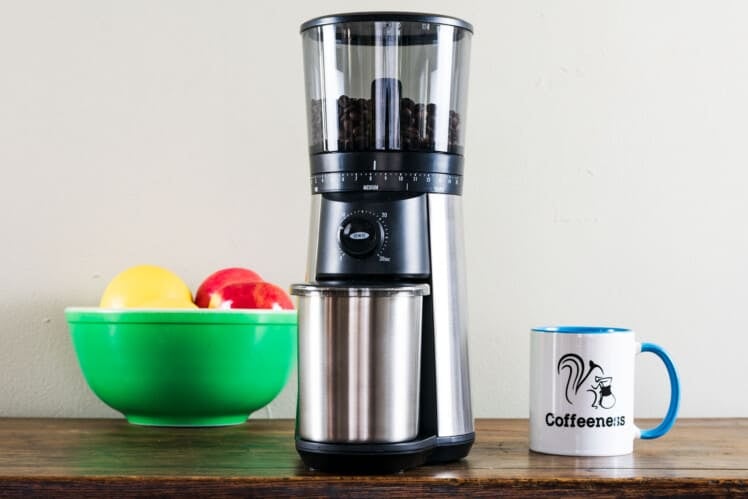 Great for Drip and Pour Over Affordable Sleek design Tinted bean hopper Not suited for espresso View offer ! This article contains affiliate links | 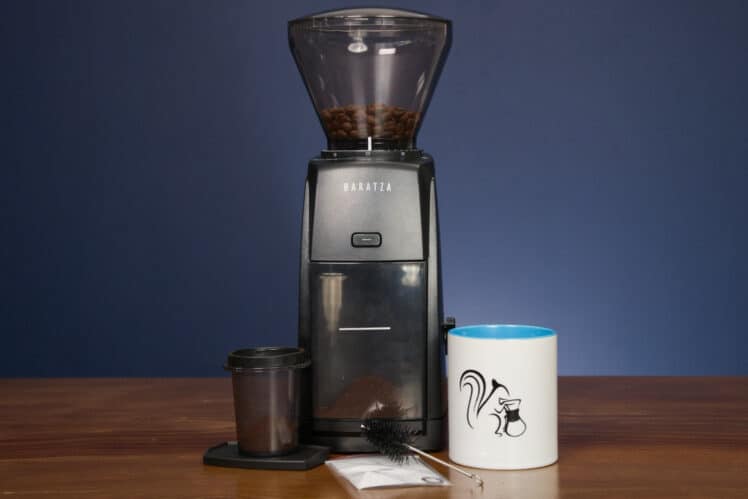 A Worthy Succesor to the Encore Compact footprint Very affordable Suitable for all preparation methods Confusing dosing system Rather loud View offer ! This article contains affiliate links | 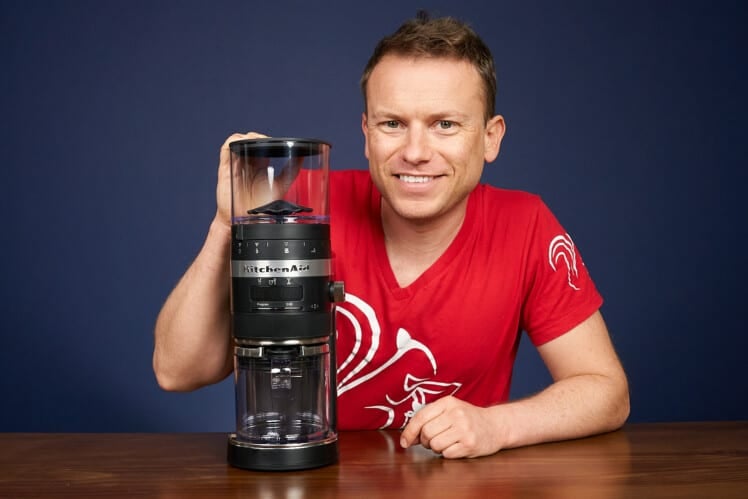 A solid performer, especially for drip machines Screen Different grinding modes Fine grinding stages Price View offer ! This article contains affiliate links | 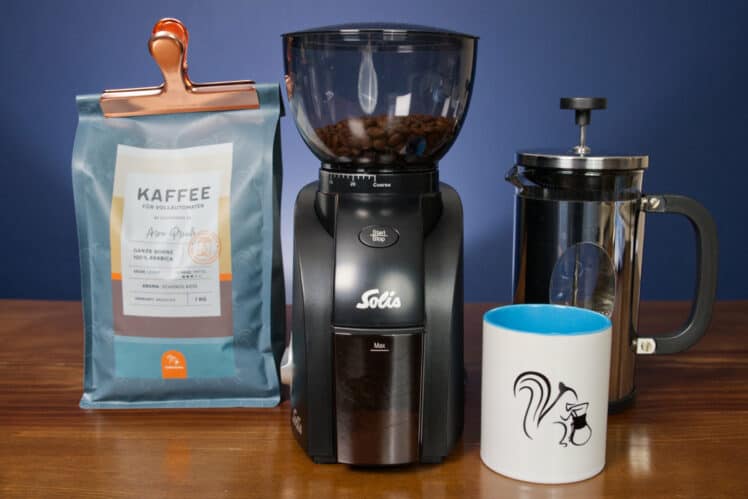 Not much new to discuss Consistent results Almost no static charge Compact Not suitable for espresso Timed doser function irrelevant View offer ! This article contains affiliate links | 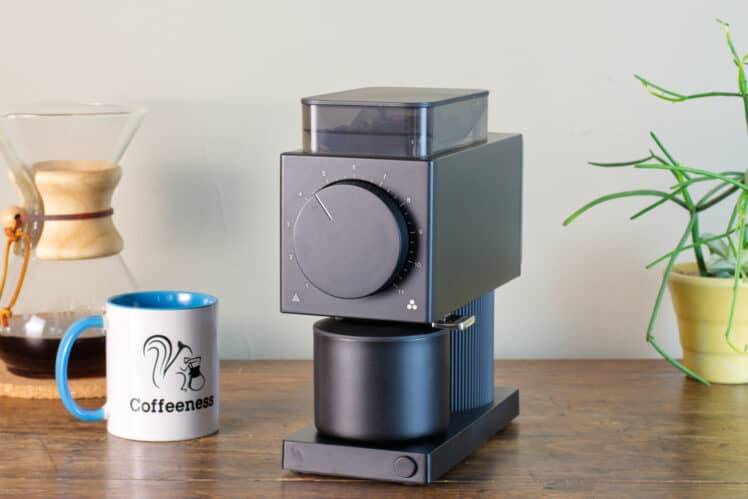 An amazing grinder for manual brewing Impressive performance Small footprint Gorgeous design Rather expensive Not suitable for espresso View offer ! This article contains affiliate links |  A game-changing burr grinder Suitable for all brewing methods Beautiful design Great value Rather messy View offer ! This article contains affiliate links |






Updated on: 28. May 2026 Facts checked by Nicholas Marshall
Hi! My name is Arne. Having spent years working as a barista I'm now on a mission to bring more good coffee to the people. To that end, my team and I provide you with a broad knowledge base on the subject of coffee.
Clearly explained: Our review process

If you’re searching for the best burr coffee grinder, you’ve come to the right place. Here at Coffeeness, our philosophy is: anyone who drinks coffee from a pod has lost control of their life.
However, I think I need to expand on that philosophy, because if you’re drinking java made from pre-ground beans, you’re also in need of some coffee counseling. Hence, you need to know how to choose the best coffee grinder for your style of brewing.
One question people like to ask is, “Do I really need a coffee grinder?” So, let me explain why adding a burr grinder to your life is important. You see, even the highest quality coffee beans lose their delightful aromas within minutes of grinding. So, when you purchase coffee pods or any form of pre-ground coffee, you’re actually getting stale coffee.
While each brewing method requires a different grind texture, not every burr coffee grinder is equally suited to both coarse and fine grinding. In an ideal world — and kitchen — you’d have a whole arsenal of different coffee bean grinders to choose from. That’s not realistic for most of us, so we need to choose the best burr coffee grinder for our particular needs … whether that be making espresso, pour over or French press.
It’s not as simple as throwing in some beans and hitting a button. This is why I’ll go into lots of detail and dig into subcategories in this best burr coffee grinder guide.
For example, I’ll go into more detail about the differences between manual and electric burr grinders. And no, it’s not just about the power cable.
Other important factors I know you’ll want to keep an eye on are:
Getting the best value for your money
Acceptable noise levels
And just like with my super automatic espresso machine reviews, I’ll also explore the wonderful world of coffee grinder design.
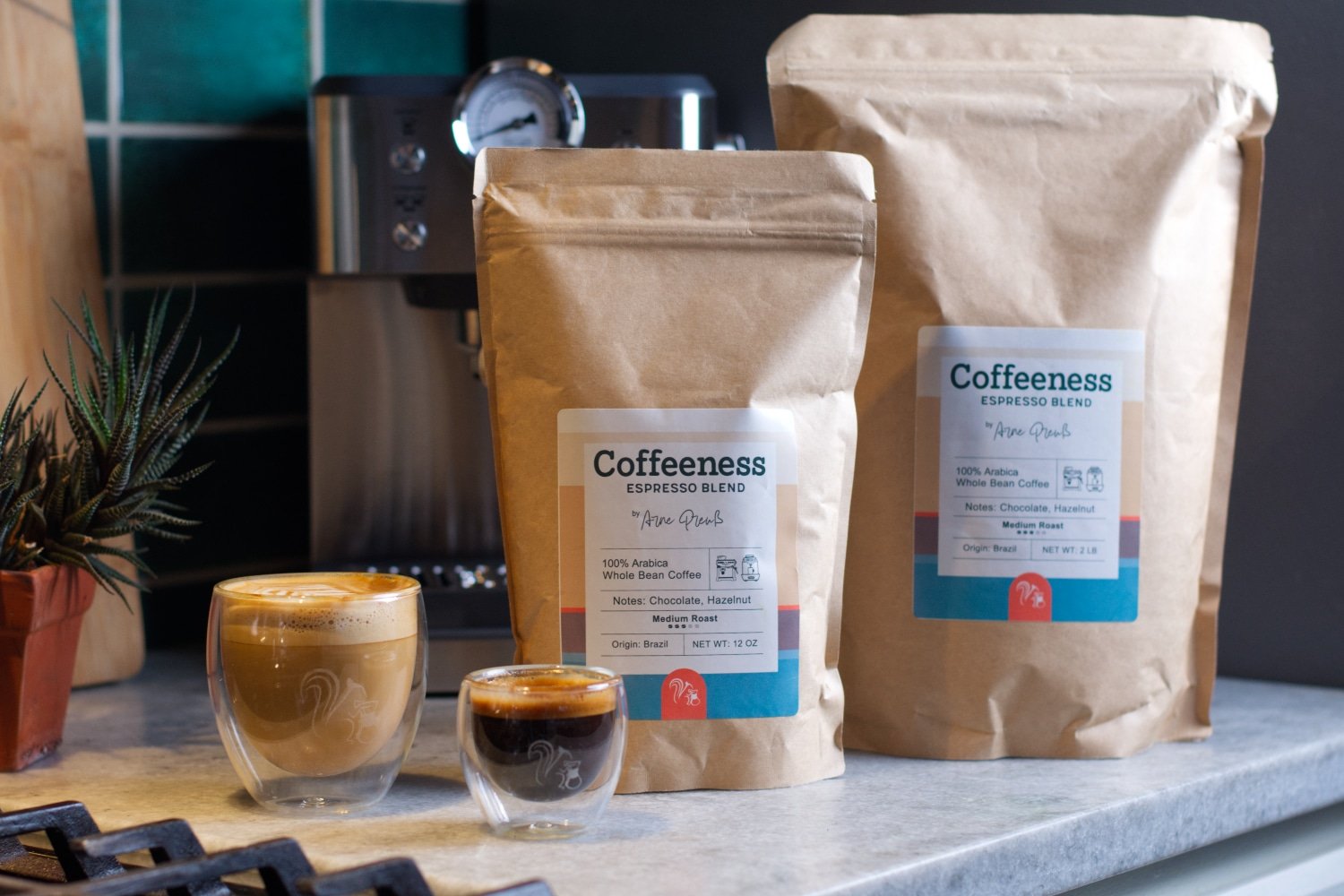
Coffeeness Medium Roast Espresso
Well-balanced with chocolate & hazelnut notes
Freshly roasted in Brooklyn
Very low acidity
Table of Contents
Our Top 10 Best Burr Coffee Grinder Quick Picks
Whether you’re looking for your first conical burr coffee grinder or thinking of an upgrade, making a final decision isn’t easy. I mean, with so many options available, how the heck are you supposed to choose?
Don’t worry, I’ll go over everything you need to know before committing later in this guide. I’ll even throw in tips for getting the most out of your burr grinder, as well as a quick cleaning guide.
In the meantime, here’s a top 10 list of my favorite burr coffee grinders:
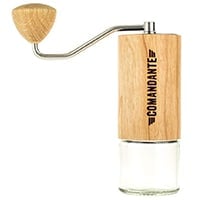
COMANDANTE C40 MK4 NITRO BLADE
High-quality build
Consistent results
Chic design
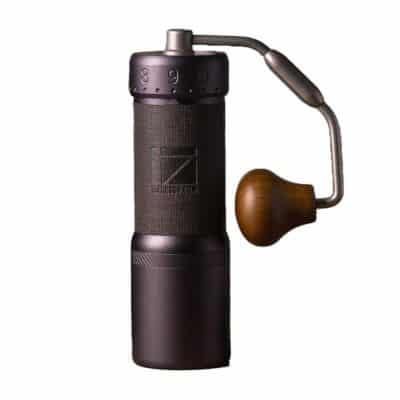
1ZPRESSO J-ULTRA
Titanium-coated burrs
Incredible grind range
Suitable for all brewing methods
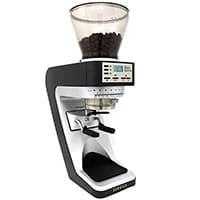
BARATZA SETTE 270WI
Tons of features
High-quality build
270 grind adjustment settings
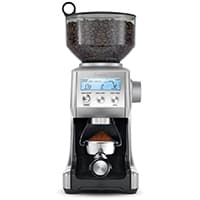
BREVILLE SMART GRINDER PRO
Relatively affordable
Great for espresso
Large user interface
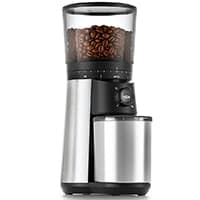
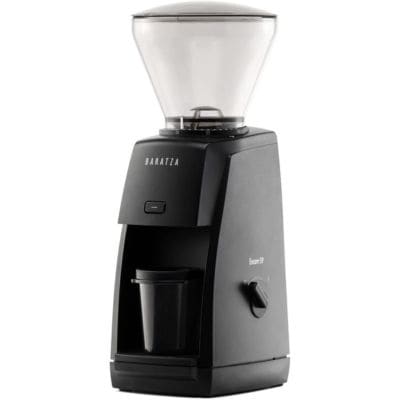
BARATZA ENCORE ESP
Suitable for all brew methods
40 grind adjustment settings
Great value
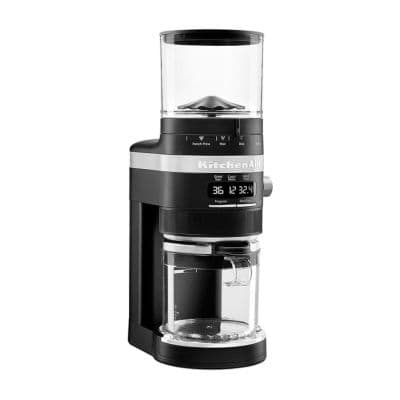
KITCHENAID BURR GRINDER
High-quality build
70 grind settings
Programmable dosing
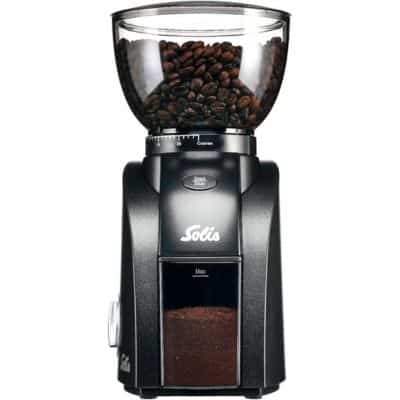
SOLIS SCALA ZERO STATIC
Budget-friendly
Ideal for coarser grind sizes
24 grind adjustment settings
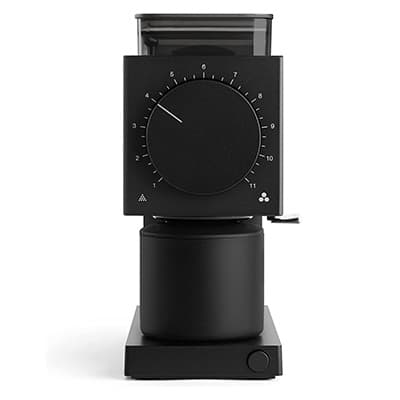
FELLOW ODE
Very quiet in operation
Minimalist design
31 grind adjustment settings
What Is the Best Burr Coffee Grinder for Home Use?
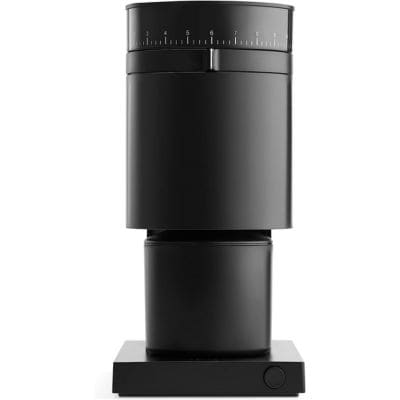
The best burr coffee grinder for home use could be any of the models I’ve selected. It really comes down to your preferred brew method and how much you’re willing to spend. With that said, an all-rounder like the Fellow Opus is definitely worth considering if you like to experiment with everything from espresso to cold brew.
Coming up, I’ll help you narrow down your options by offering a few things to consider as you’re looking for the right coffee grinder.
How to Choose the Right Burr Coffee Grinder for You
My golden rule for coffee is that if you’ve gone all out on a home espresso machine, your grinder should at least match it in terms of performance. If you’re a French press or pour over coffee lover, you can get away with a more affordable coffee grinder. That said, my idea of “affordable” might not be the same as yours.
Ordering a separate grinder along with each new coffee machine would really be the right way to do it. But of course, no one does. After all, it would seem like overkill, right? Still, that would be the logical course of action.
So, how do you find your way around the world of coffee bean grinders? Here are the broad categories to be aware of when searching for the best burr coffee grinder to fit your needs:
Coffee Grinder Budget
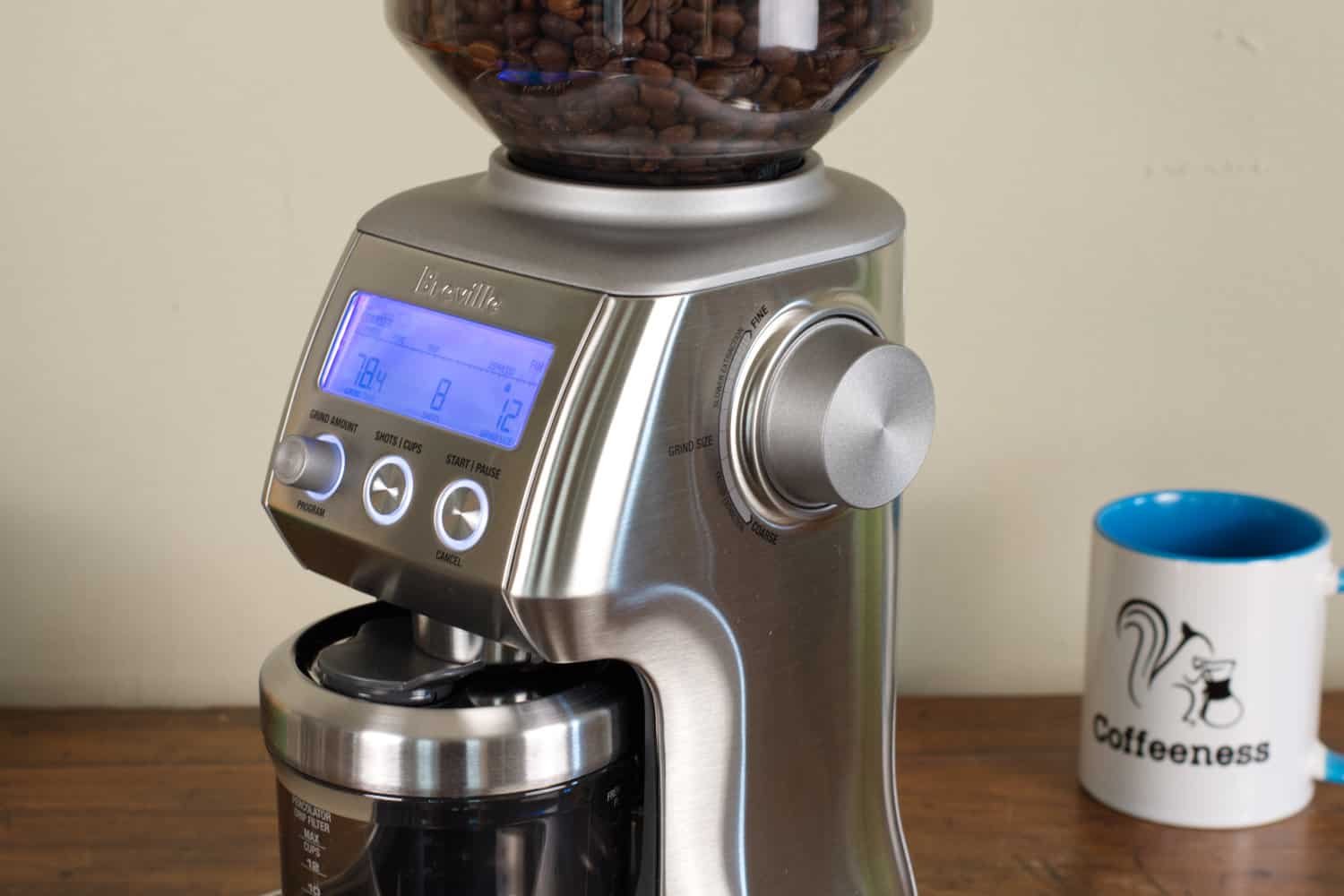
There’s little doubt that budget will be one of the main driving factors when it comes to choosing the best burr coffee grinder for your needs. Still, if you’re dedicated to the idea of making top-notch coffee at home, think of a coffee burr grinder as a worthy investment.
In many cases, your coffee grinder will cost quite a bit more than your coffee brewing equipment. For example, a Hario V60 dripper will set you back a measly $29.00. However, if you plan on using high-quality coffee beans and taking the time to hone your technique, purchasing one of the top rated coffee grinders will be essential.
With all that said, a great coffee grinder doesn’t have to send you into bankruptcy. You’ll find plenty of affordable options below. Just don’t imagine you can get away with buying a cheap blade grinder. You’ll end up with poor grind consistency and feeling like you’ve wasted your money.
Type of Burr Coffee Grinder
Broadly speaking, burr coffee grinders can be divided into two distinct categories: manual and electric. Of course, there’s a whole lot more to consider – such as burr type and materials used – all of which I’ll get into later. For now, though, you should think about whether it’s a hand grinder or an electric grinder you’re after.
Manual coffee grinders like the Timemore C3 Pro require a fair bit of elbow grease and only grind small portions at a time. Then again, they’re often on point when it comes to espresso. Additionally, you can use them anywhere and everywhere without electricity. But be warned, the price of the high-end models might bring tears to your eyes.
An electric coffee grinder saves you from having to sweat, but you will have to deal with the machine’s limitations. There’s a huge range of options and prices. Plus, almost every model is designed for a specific preparation method. For example, when I make espresso I always haul out my beloved Baratza Sette 270Wi. But I’ll use a different model when I’m preparing pour-over coffee.
Preparation Method
Honestly, there’s no point spending extra money on a dedicated espresso grinder if you’re only going to use it for drip coffee. In fact, if you tend to stick with one preparation method in particular, you’ll have an easier time finding a suitable grinder.
The Capresso Infinity Plus, for one, is a whizz at producing the coarser grinds needed for a French press, while the Comandante C40 MK4 Nitro Blade can produce powder even finer than what’s required for espresso.
In theory, all burr coffee grinders can produce the full spectrum of particle sizes. What makes some coffee grinders stand out from the crowd is the uniformity of the grind produced. To achieve a successful extraction, each and every particle should be the same size. Sure, I’m overstating it slightly, but consistency is important.
Coffee Grinder Design/Build
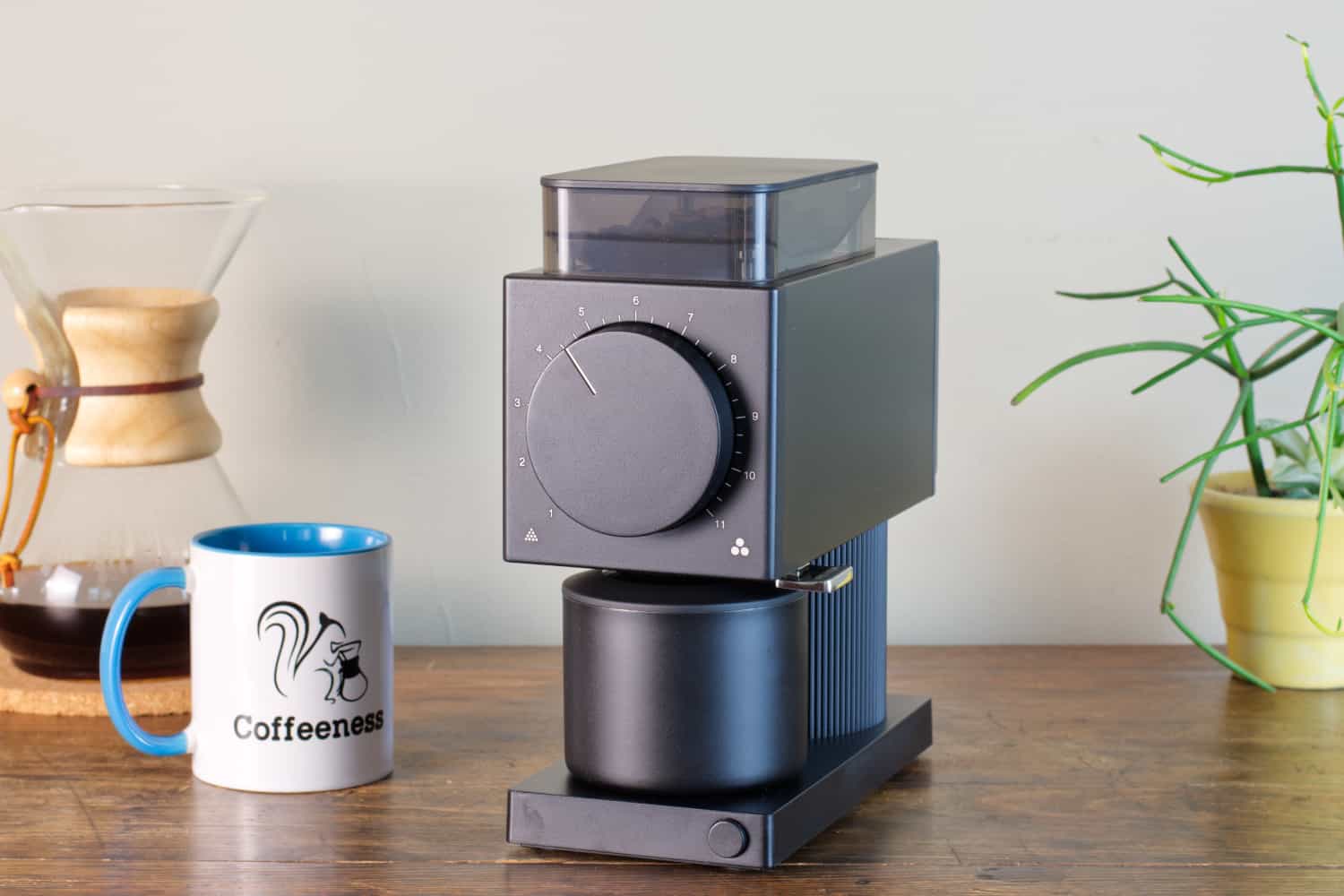
Unless you’re going for a compact hand grinder, countertop space will be an important consideration. Seeing as you’re looking for a coffee grinder, it’s almost a given that an espresso machine, drip coffee maker or pour over setup is already taking up space in your kitchen. With that in mind, it’s always a good idea to take measurements before committing to a bulky addition.
It almost goes without saying that stainless steel construction is better than plastic. However, if you’re on a tight budget you may have to sacrifice some amount of durability. There’s also the question of which burr material is better – stainless steel or ceramic. In short, there’s no definitive answer.
If aesthetics are important to you, the best burr coffee grinder will be both functional and beautiful. Personally, I think even the most basic, affordable grinder looks cool sitting in my kitchen. Still, if you want something sleek and stylish, there are plenty of options out there.
Burr Grinder Features
As you’re looking for the best home coffee grinder, manufacturers will try to sell you on every feature under the sun. That’s all well and good, but will you really need a portafilter cradle, for example, if you’ll only be using the grinder for a French press? Probably not. Alternatively, if espresso preparation is your thing, then yes, a portafilter cradle will be a great help.
Some affordable grinders, like the OXO Brew, feature a timer function. That’s really cool to have, but you’ll need to recalibrate when you change beans or your grind setting. A function that allows you to grind by weight is way cooler. Still, you’ll only really see that on more expensive models. Besides, a good coffee scale won’t set you back too much money.
It’s best not to get overly distracted by the number of grind settings involved unless you’re looking for the best espresso grinder. After all, what’s really important is how effective the grinder is at maintaining consistency. As for bean hopper capacity, don’t worry about that too much either. Ideally, you should be using a coffee storage container and adding beans to the hopper before each use. Freshness is key!
Our Top 10 Best Burr Coffee Grinder Picks in Detail
Now that you’ve got a better idea of what to look for, it’s time to explore my best burr coffee grinder picks in detail. You’ll find a couple of manual grinders first, then seven electric models. So, feel free to skip ahead if you like!
Comandante C40 MK4 Nitro Blade: Overall Best Manual Coffee Grinder
Simply the best
Comandante C40 MK4 Nitro Blade
Still reigns supreme
Rugged and durable
Elegant design
Nitro blade burrs
Very consistent results
High-quality engineering
Very expensive
| Comandante C40 MK4 Nitro Blade | |
| Current price on Amazon | $285.00 |
|---|---|
| All specifications | |
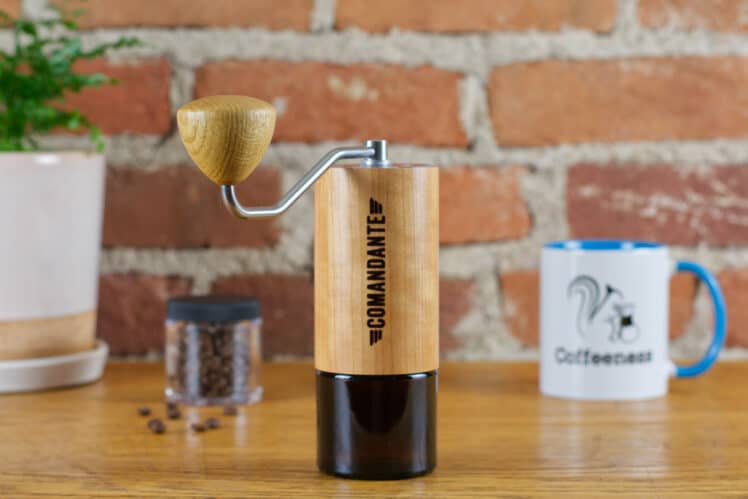
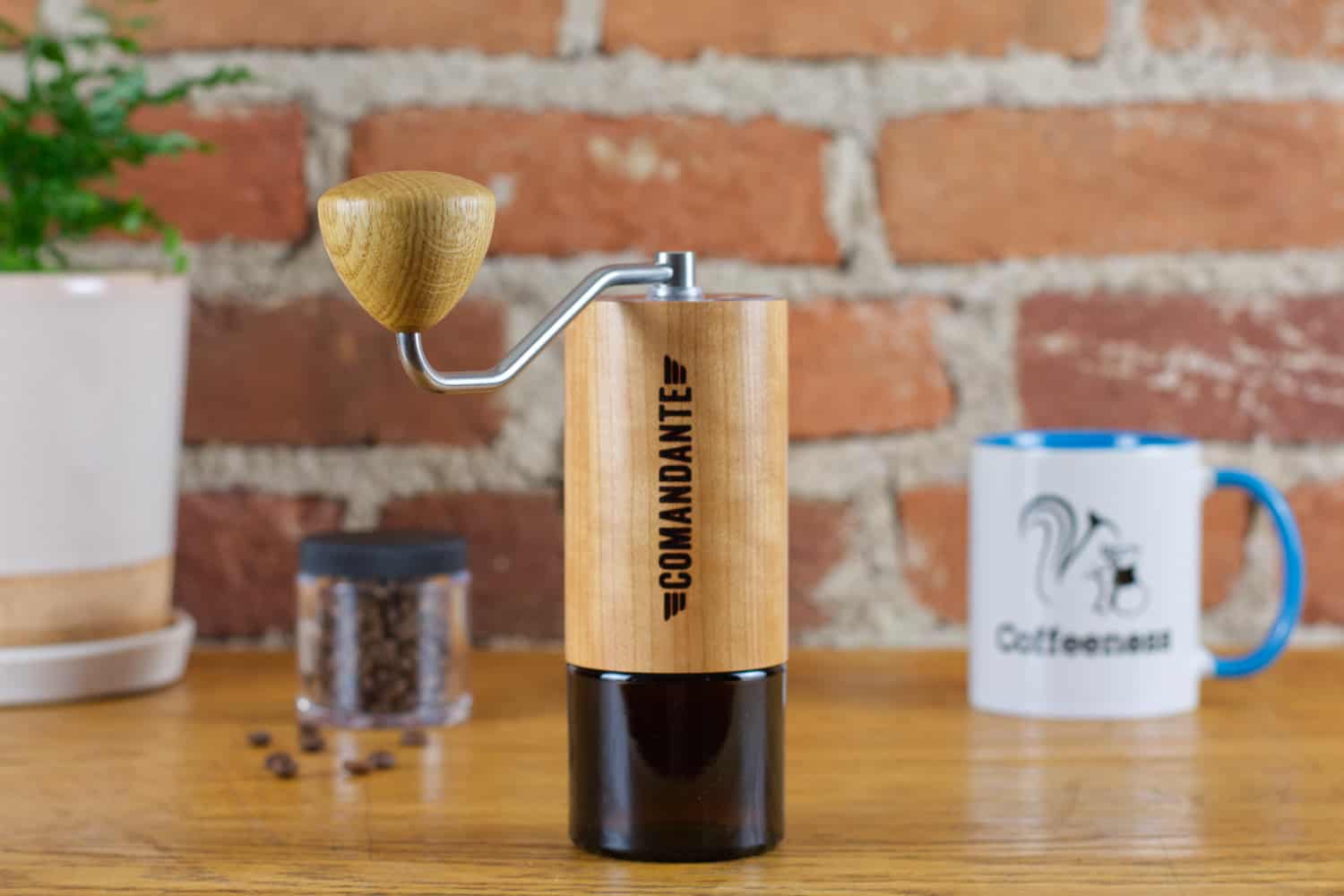
If my rhyming skills were more capable, I would compose a love poem dedicated to the Comandante C40 MK4 Nitro Blade. Since first reviewing it, this hand coffee grinder has traveled all over the world with me. And I’m not exaggerating! It’s the first thing I pack along with clean underwear … just not next to one another in the suitcase.
So far, I haven’t found another hand coffee grinder that delivers better precision across the grind spectrum and functions so flawlessly. Plus, to my knowledge, there’s no other hand coffee grinder that chews through beans faster.
This is thanks, in no small part, to the sophisticated way it transfers power and a double-ball-bearing mounted grinding mechanism. Bottom line, the beans are ground before your arm can even start complaining.
As is inevitably the case, the best manual coffee grinder comes at a price. At $285.00, this hand-crank grinder costs a chunk of change. And forget about a price drop down the line.
For that reason, I only recommend the Comandante if, like me, you’re a bit of a nomad and can’t bear life without great coffee everywhere you go. And, of course, if you find that grinding coffee by hand helps you reach a higher state of consciousness.
See Also: Comandante Grinder Review
1Zpresso J-Ultra: Best Manual Espresso Grinder
Simply Incredible
1Zpresso J-Max S Manual Coffee Grinder
A champion among hand grinders
48mm titanium coated stainless steel burrs
Staggering amount of grind settings
Magnetic catch cup
Easy to use
Suitable for all brewing methods
Rugged and stylish
Comandante might be worried
| 1Zpresso J-Max S Manual Coffee Grinder | |
| Current price on Amazon | $199.00 |
|---|---|
| All specifications | |
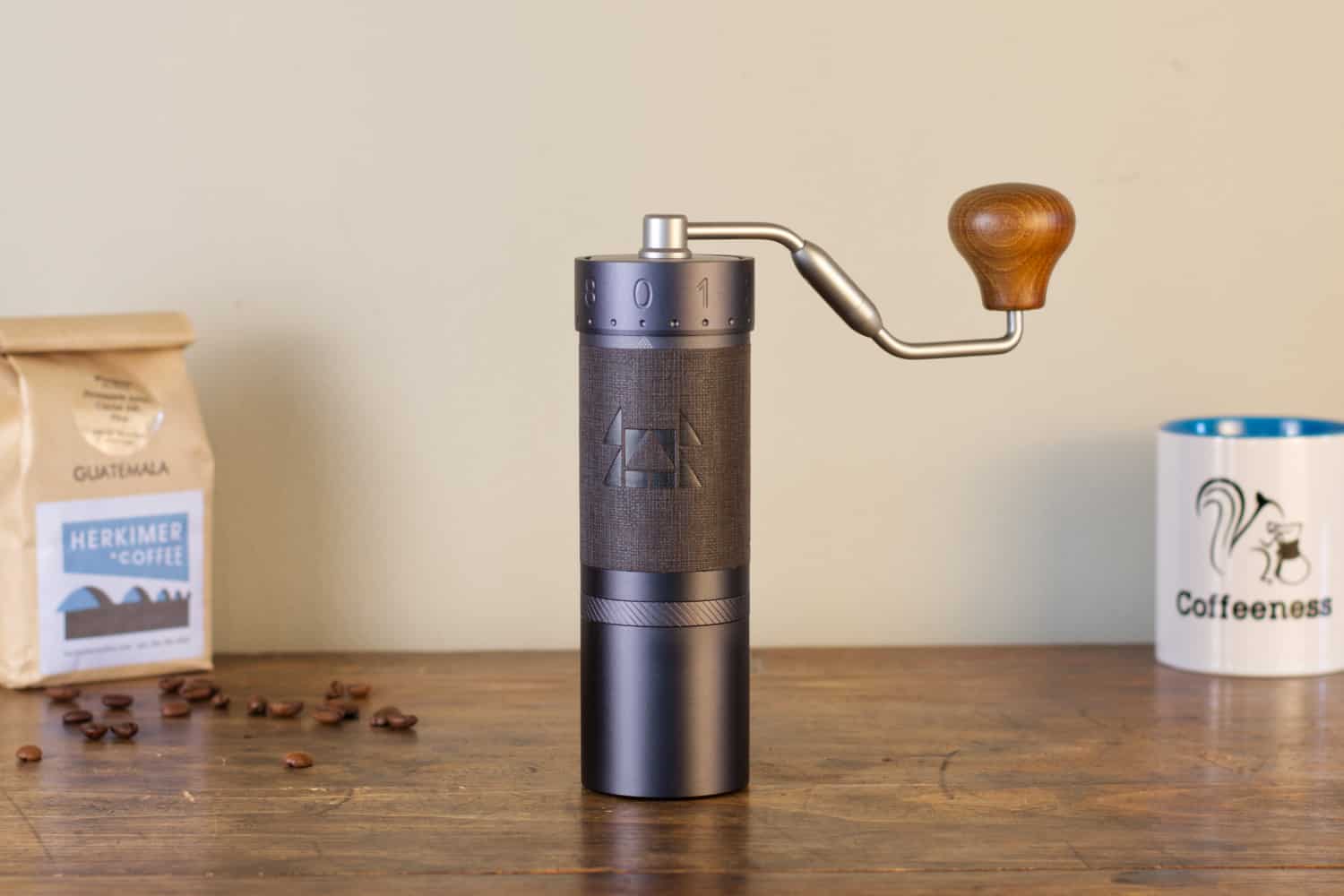
I simply had to include the wonderful 1Zpresso J-Ultra, seeing as it’s one of the most impressive manual coffee grinders I’ve ever used. In fact, the aforementioned Comandante only narrowly escaped from being toppled from its “Best Performing” throne!
The 1Zpresso J-Ultra costs a ridiculously reasonable $199.00. Seriously, I’d happily pay twice as much for this thing, given its build quality and performance.
Equipped with 48mm titanium-coated stainless steel burrs, the J-Ultramakes short, easy work of grinding even the lightest roast coffee beans. That’s not all though; there are an astonishing 450 grind settings to choose from, with just 8 microns of movement between each click. That means this beauty works really well for espresso, as well as just about any other brewing method under the sun.
Thanks to its rugged design and magnetic catch cup, using the 1Zpresso J-Ultra is a piece of cake. Plus, the grinder features a neat folding crank arm and comes with a durable, high-quality travel case. What more can I say? I absolutely love this hand grinder!
See Also: 1Zpresso J Max Review
Baratza Sette 270Wi: Best Burr Grinder for Espresso
best espresso grinder
Baratza Sette 270Wi
The Baratza Sette 270Wi — my favorite grinder for espresso
Unique design with “brains”
Up to 270 grind settings
Very easy operation
No dead space
Minimal static charge
Professional quality for home use
Some find the weighing feature “error-prone”
| Baratza Sette 270Wi | |
| Current price on Amazon | $599.95 |
|---|---|
| All specifications | |
OK, so you already know that I consider Baratza Sette 270Wi the best burr grinder for espresso beans. And for good reason. Sure, you could get something more affordable, but you won’t find a grinder that produces a more uniform grind — and that does a clean and professional job of it.
Top coffee grinders do cost money though. The price tag on all that awesomeness is $599.95. A big chunk of that can be attributed to the intelligent built-in scale, which lets you grind by weight and is what the W in the model name refers to. As a result, dosing is spot-on. The much less expensive Baratza Sette 30 uses a timer for dosing.
To be honest a lot of what sets the Baratza Sette 270 Wi apart are subtleties that you’ll only really pick up on — and appreciate — when your espresso skills and palate have advanced a bit. But the thing about those niceties is that they’re like errors in the making of movies: once you’ve spotted them you just can’t unsee — or untaste — them. Remember when that Starbucks cup was spotted in the Game of Thrones? It’s kinda like that.
See Also: Baratza Sette 270Wi Review
Breville Smart Grinder Pro: Best Budget Coffee Grinder
performs really well
Breville Smart Grinder Pro
Great value for money
60 grind settings
Suitable for espresso
Large LCD display
Includes portafilter cradles
Fantastic value for money
Not great for coarser grind sizes
| Breville Smart Grinder Pro | |
| Current price on Amazon | $199.95 |
|---|---|
| All specifications | |
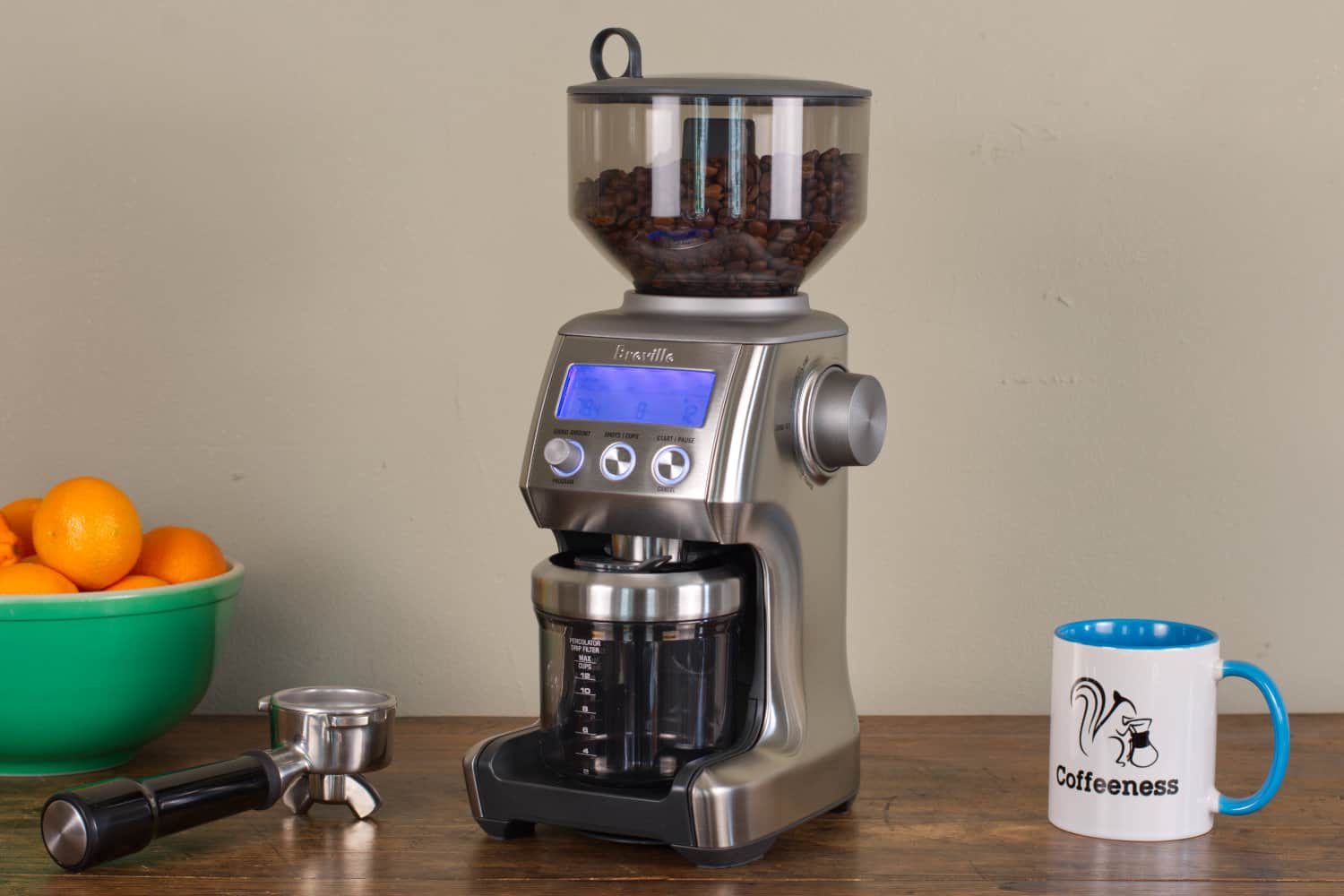
While it has its flaws, the fact that the Breville Smart Grinder Pro produces a beautifully uniform espresso grind for $199.95 deserves a big thumbs up.
Keep in mind that the Breville Smart Grinder Pro is a bit like the Baratza Encore in that it’s best at one end of the grind range. So, it’s a hit for espresso but a miss on French press. As an added bonus, noise and static levels are tolerable.
There are a whopping 60 grind settings, with the finest powdery enough for Turkish coffee, which is a testimony to its serious wattage. While that’s great, it is going to see those stainless steel burrs heat up fast. So, go easy; you don’t want to singe your beans.
Also, watch out for an issue in the grind cup design. The opening in the lid is small and the vibrations that come from longer grinding sessions can bump it out of position below the chute, resulting in a collection loss of coffee grinds. Aside from the mess, this can potentially clog the grinder. Ditch the lid — problem solved.
You can also grind directly into a portafilter, which is nice.
The Breville Smart Grinder Pro won’t satisfy true coffee geeks, but such an impressively uniform espresso grind at that price is not something to turn one’s nose up at.
See Also: Breville Smart Grinder Pro Review
OXO Brew: Best Burr Conical Burr Grinder for Drip Coffee
best entry-level electric grinder
OXO Brew Conical Burr Coffee Grinder
Great for Drip and Pour Over
Affordable
Sleek design
Tinted bean hopper
Stainless steel conical burrs
Stainless steel grounds bin
Not suited for espresso

| OXO Brew Conical Burr Coffee Grinder | |
| Current price on Amazon | $98.99 |
|---|---|
| All specifications | |
If you’re in the market for an affordable and approachable burr coffee grinder, the $98.99 OXO Brew Grinder could be just the ticket. Don’t be fooled by the OXO Brew’s budget price tag – having tested it out, I can tell you that this grinder punches well above its weight.
Featuring an elegant, streamlined design and plenty of stainless steel in its construction, the OXO Brew grinder doesn’t skimp on quality. I especially appreciate the generous 12 ounce (340 gram) bean hopper, which is UV tinted and has an airtight lid.
Getting the best out of this grinder is fairly straightforward. The stainless steel conical burrs have 15 adjustment steps with micro adjustment settings in between. That means you can really dial in your preferred setting. There’s a timer function for grinding, which is really nice. Once you’ve found your ideal time/dose setting the grinder will remember it for next time.
In my experience, the OXO Brew Grinder is really effective for Chemex and other pour over methods. You’ll get a really consistent grind in the middle of the scale. What’s more, this grinder is great for AeroPress and moka pot lovers. However, French press aficionados should look elsewhere – the OXO struggles for consistency when it comes to coarser grind sizes.
See Also: OXO Coffee Grinder Review
Baratza Encore ESP: Best All-Rounder Burr Coffee Grinder
Affordable and Effective
Baratza Encore ESP
A Worthy Succesor to the Encore
Compact footprint
Very affordable
Suitable for all preparation methods
Durable construction
Confusing dosing system
Rather loud
| Baratza Encore ESP | |
| Current price on Amazon | $199.95 |
|---|---|
| All specifications | |
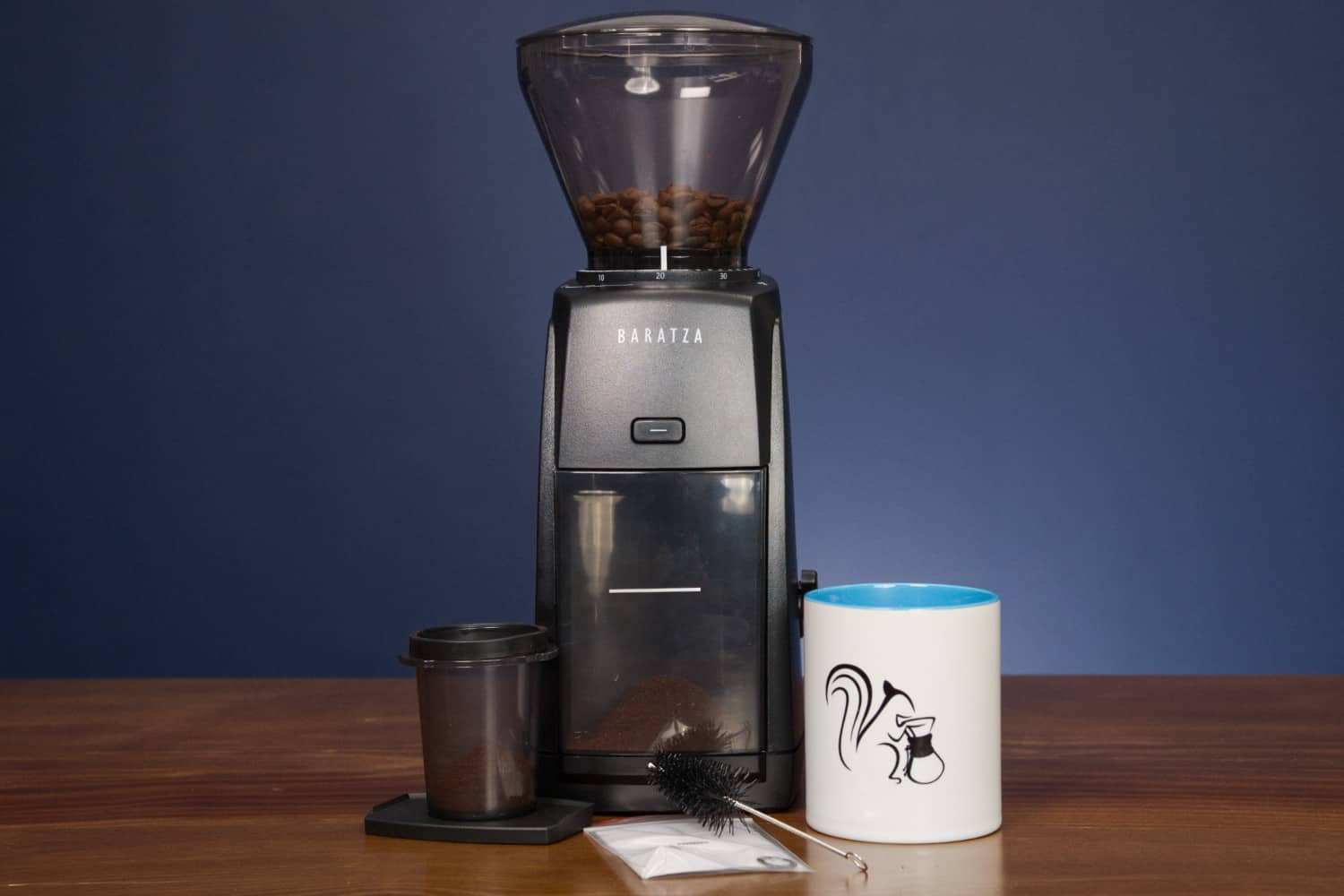
The original Baratza Encore is one of my favorite grinders of all time. However, the updated Baratza Encore ESP certainly overshadows its predecessor in terms of performance.
Costing an entirely reasonable $199.95, the Baratza Encore ESP looks almost identical to its older sibling. However, this great grinder is packing some exciting new features under the hood.
For starters, the Encore ESP is equipped with an improved M2 burr set, which promises even higher levels of precision. What’s more, Baratza has done something really clever to make the Encore ESP suitable for all coffee brewing methods.
You see, the first 20 grind settings have been specially calibrated for espresso preparation, with just 9 microns of burr movement per click. And the next 20 settings are calibrated for drip, French press and other brew methods. During my testing, I was really impressed by the Encore ESP’s performance, although there were a couple of confusing design flaws to contend with. Still, for this price, I’m willing to overlook small annoyances!
See Also: Baratza Encore ESP Review
KitchenAid Burr Grinder: Best Mid-Range Burr Grinder
Awesome Entry-Level Grinder
KitchenAid Burr Coffee Grinder
A solid performer, especially for drip machines
Screen
Different grinding modes
Fine grinding stages
Very easy to clean
Quiet
No static charge
Price
| KitchenAid Burr Coffee Grinder | |
| Current price on Amazon | |
|---|---|
| All specifications | |
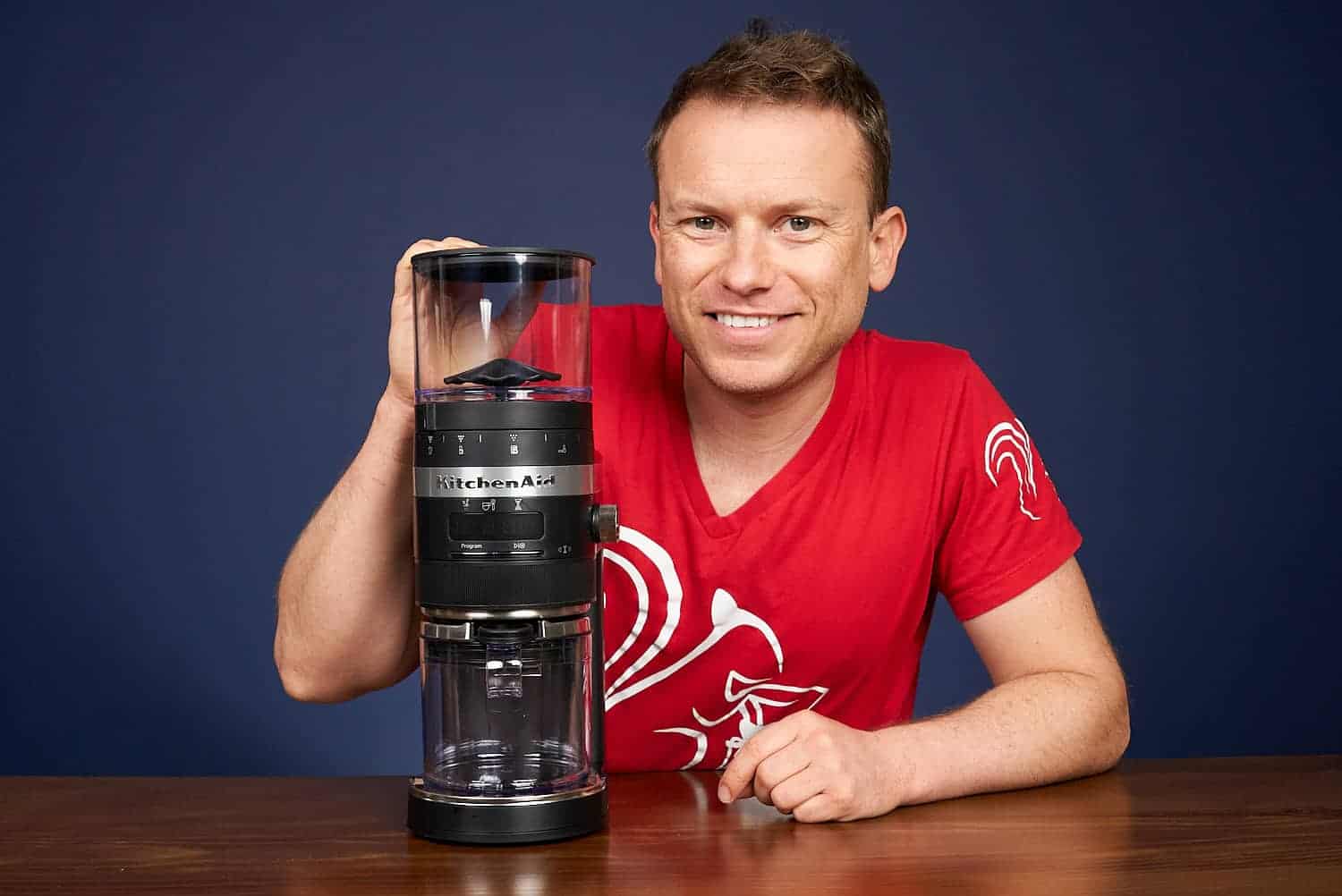
After having put the KitchenAid Burr Coffee Grinder through its paces in the Coffeeness kitchen, I’m happy to report that this model represents superb value for money. In fact, I was rather surprised by how well the thing performed given its $N/A asking price.
For starters, the KitchenAid grinder is extremely well made, despite an abundance of plastic in its construction. Plus, the grinder is nice and weighty which is always a plus. Featuring stainless steel conical burrs and offering 70 adjustment settings, the KitchenAid Burr Coffee Grinder can be used for any brew method. Oh, and it comes with a portafilter holder as well as a nice catch cup.
With all that said, the grinder struggles somewhat at the finer end of the grind size spectrum, so isn’t completely perfect for espresso.
I particularly appreciated the KitchenAid grinder’s anti-static technology. Seriously, it works like a charm and I experienced next to no retention issues. With that in mind, this model works really well as a single dose grinder.
Finally, the KitchenAid Burr Grinder isn’t overly loud in operation. Although it produced over 70 decibels during testing, the quality of the noise wasn’t at all unpleasant.
See Also: KitchenAid Burr Grinder Review
Solis Scala Zero Static: Best Coffee Grinder for French Press
Practically no static charge
Solis Scala Zero static
Not much new to discuss
Consistent results
Almost no static charge
Compact
Easy to use
Good value
Not suitable for espresso
Timed doser function irrelevant

| Solis Scala Zero static | |
| Current price on Amazon | $139.00 |
|---|---|
| All specifications | |
Interestingly, some coffee grinders that excel at producing a consistent grind for espresso can struggle with coarse grounds. And I shouldn’t have to tell you that particle consistency is as important for methods like French press as it is for espresso. Otherwise, finely ground coffee can slip through the mesh filter and land in your cup.
Anyway, that’s where the Solis Scala Zero Static comes in. Sure, at $139.00, you might be wondering whether or not this grinder can actually deliver. However, I can assure you that the Scala Zero Static truly shines at the coarser end of the spectrum.
Featuring a simple design, the Solis Scala Zero Static has 24 grind adjustment settings, a start/stop button and a dial to set the grind duration. You might have to use a little finesse to get good enough results for pour over, but French press drinkers needn’t look any further.
See Also: Solis Scala Zero Static Review
Fellow Gen 2 Ode: Best Burr Coffee Grinder for Pour Over
ideal for pour-over
Fellow Ode
An amazing grinder for manual brewing
Impressive performance
Small footprint
Gorgeous design
Quiet in operation
Rather expensive
Not suitable for espresso
| Fellow Ode | |
| Current price on Amazon | $399.95 |
|---|---|
| All specifications | |
I don’t think I’m alone in having quite a crush on the Fellow Ode Brew Grinder. I mean, just look at how stylish and cool it is! That’s all very well, I hear you say, but is there any substance behind that style? Having tested the thing, my answer is resoundingly in the affirmative. This grinder is easily the best quiet burr coffee grinder.
As with other Fellow products, an incredible amount of attention to detail has gone into the grinder’s design. Aside from the obviously intuitive grind adjustment dial on the front, there’s a magnetic attachment to hold the grounds bin in place. Heck, there’s even a grinds knocker to eliminate chaff and residual dust.
In terms of performance, the Fellow Ode is equipped with 64 millimeter flat burrs and 31 adjustment settings. Aside from fast grinding and a high level of consistency, the burrs are ultra-quiet in operation.
The Fellow Ode Brew Grinder will set you back $399.95, which is no trivial amount. Still, I doubt you’ll find another flat burr grinder that looks as cool and grinds as well for the money.
See Also: Fellow Ode Review
Fellow Opus: Best Value Burr Coffee Grinder
Versatile and affordable
Fellow Opus
A game-changing burr grinder
Suitable for all brewing methods
Beautiful design
Great value
Small footprint
Easy to use
Rather messy
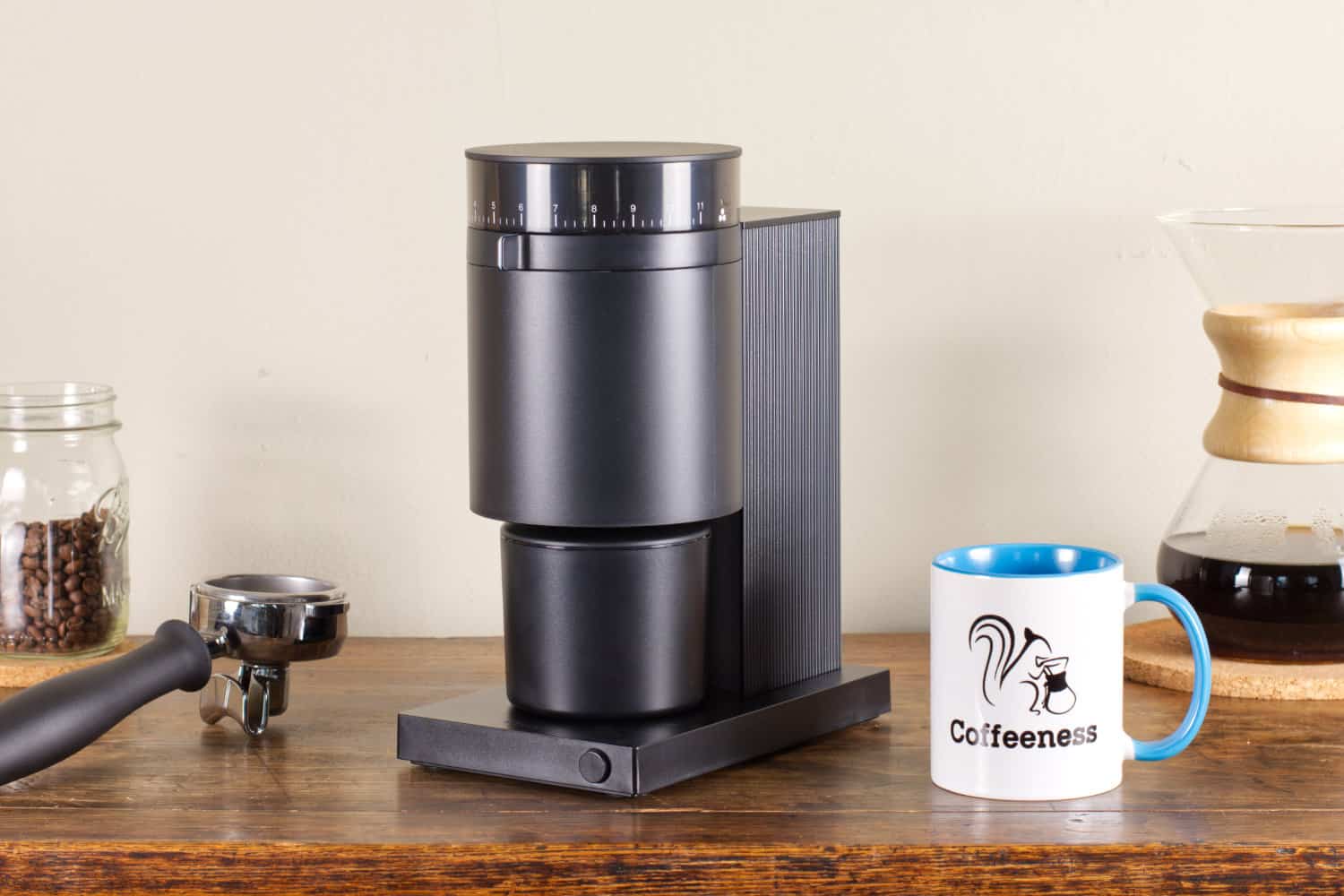
| Fellow Opus | |
| Current price on Amazon | $199.95 |
|---|---|
| All specifications | |
While the Fellow Ode really shines as a grinder for manual brewing methods, the manufacturer makes it very clear that it won’t work for espresso.
So, you can imagine how overjoyed Fellow enthusiasts were upon the release of the Fellow Opus, which was marketed as a true all-rounder. Not only that, the Opus costs just $199.95.
So, is the Fellow Opus too good to be true? Absolutely not. Sure, Fellow has made sacrifices in the build quality department, but the Opus still feels pretty solid. And there’s no denying it’s an attractive little thing. However, what really keeps the cost down is the inclusion of stainless steel conical burrs, rather than flat burrs.
During my testing, I was really impressed by this Fellow grinder’s consistent results across the grind size spectrum. Plus, its intuitive controls and single dose hopper make it a joy to use.
While the Opus is more than capable as an espresso grinder, its complicated inner ring for making micro-adjustments in the espresso range can get confusing. Still, for the price, it’s hard to really complain!
See Also: Fellow Opus Review
What to Look for in a Coffee Grinder
I’m all for “sharing is caring,” so I’m happy to tell you exactly how I conduct my reviews — all the way down to what coffee beans I use and what I take into consideration. No secrets and no lies.
What’s the most important thing to look for when buying a new grinder? Well, a machine that matches your coffee brewing style, and where quality is clearly a priority.
With that in mind, it’s possible to compare a good but affordable hand coffee grinder like the Timemore C3 Pro with a stylish electric device like the Eureka Mignon Notte or the Rancilio Rocky. In fact, that’s exactly what you want. How else could you decide?
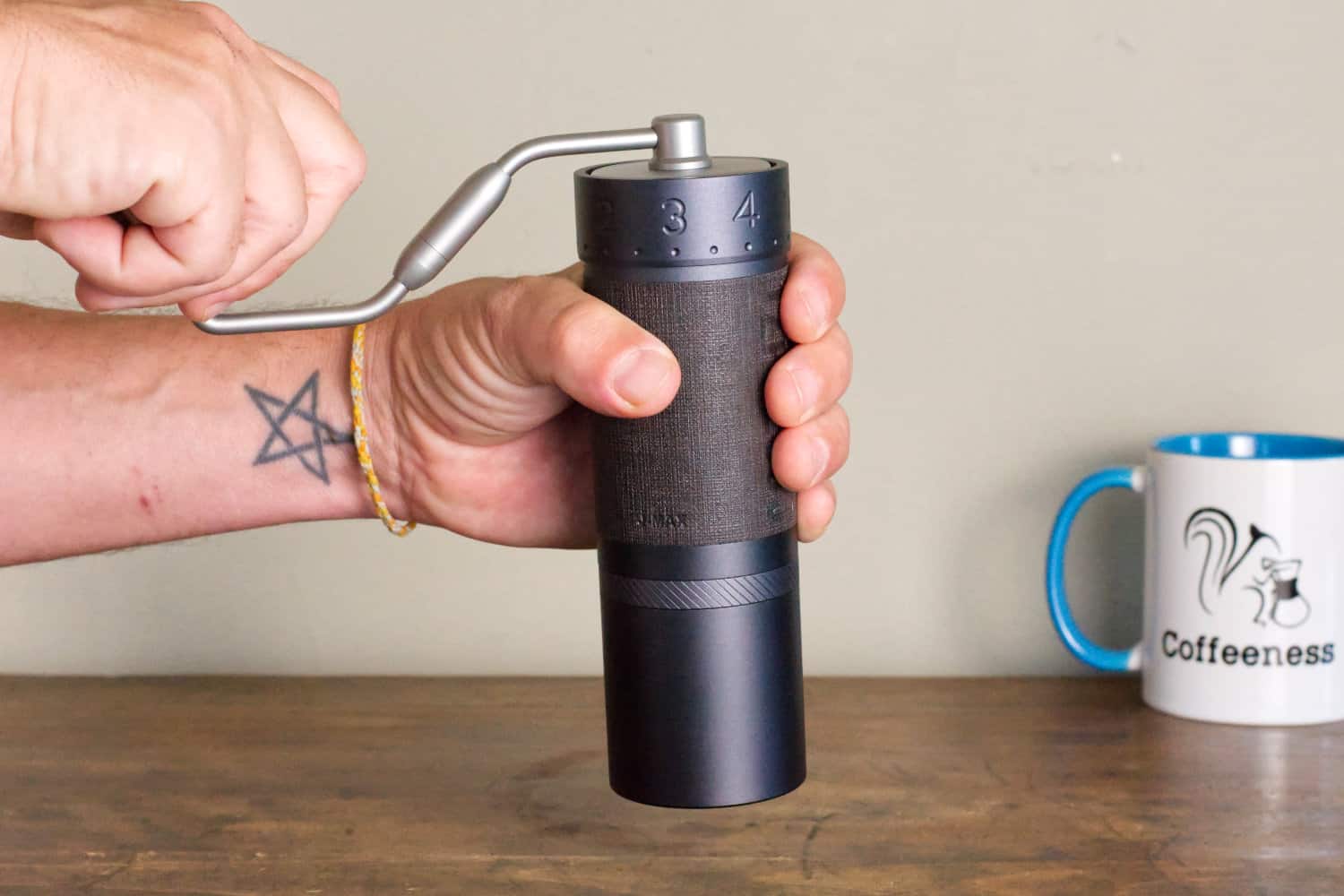
Breaking that idea down into specifics, these are boxes that the very best burr coffee grinder will check:
A match for your brewing style
Grind size can be steplessly adjusted
Little to no coffee remains in the machine after grinding
Every single granule is a perfect replica of the next
The motor and burrs don’t heat up the coffee
There’s minimal static buildup
The grinder is safe, well-constructed and durable
The settings are intuitive and easy to adjust
You may have already gathered that it’s pretty difficult to determine those things when looking at a grinder online or in a shop. Which is why an ordinary coffee lover can easily become overwhelmed by all the wrong things — like price. Anyway, it’s rare to find a grinder that’ll check every single one of those boxes.
Particle Size and Consistency
Chances are you’re sick of hearing me say it, but consistency in particle size is the single most important factor to consider when shopping for a grinder. To achieve an even extraction, you want your coffee grounds to be as uniform in size as possible. No matter how you’re brewing your coffee. Trust me, if you’ve only ever used a blade grinder, the results from a grinder worth owning will blow your mind!
Still, as we’ve seen, not all grinders can achieve consistency across the grind size spectrum. For example, a hand grinder like the JavaPresse won’t be a great option if you’re preparing French press, although it’s an ace performer for Aeropress.
That’s why it’s important to choose carefully. You’ll need to select the best burr coffee grinder for your usual preparation method. That, or start a coffee grinder collection like me!
Grinding Speed and Heat
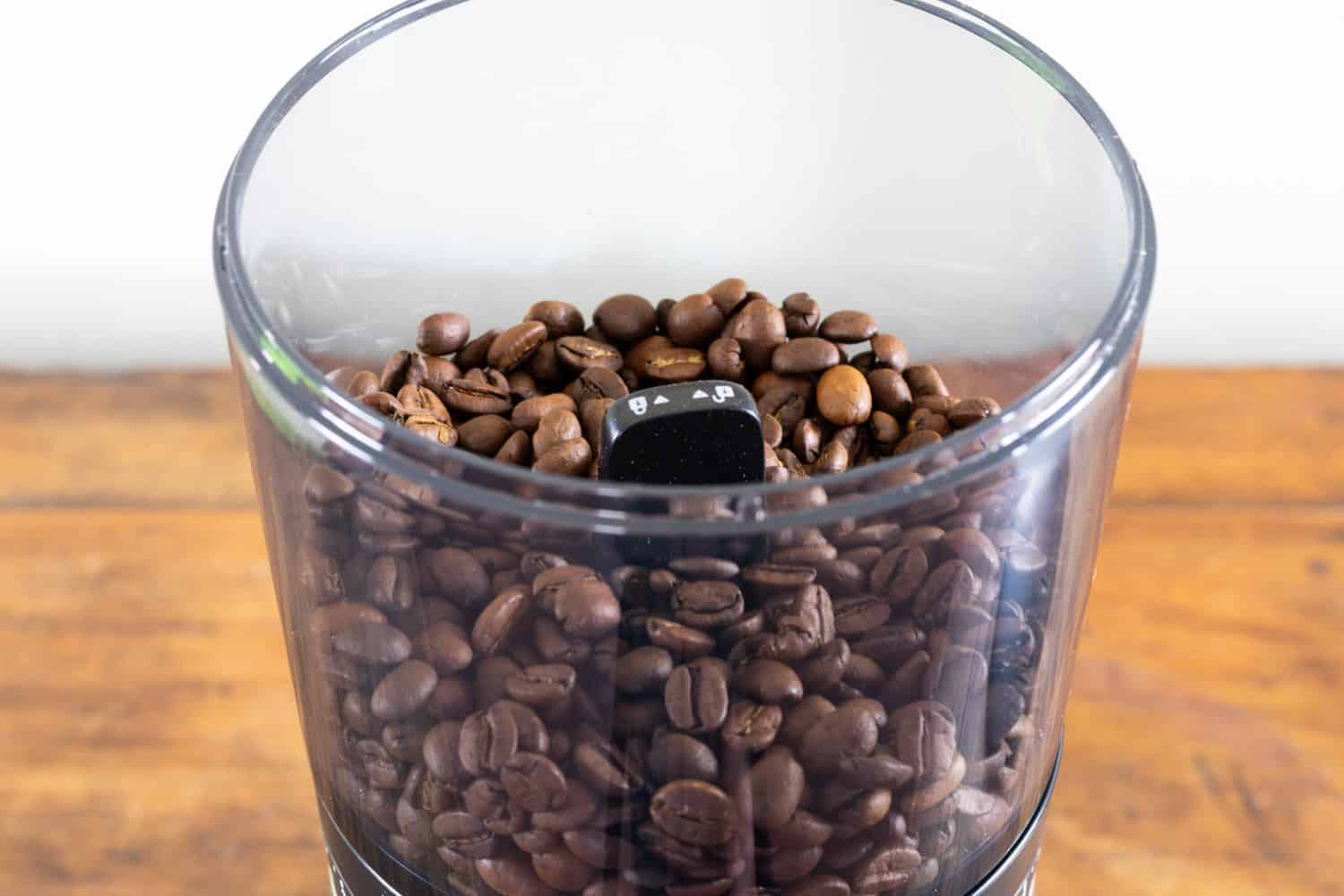
There’s a lot of confusion about grinding speed and how it relates to heat buildup. Obviously, if too much heat is created during the grinding process, you run the risk of damaging your coffee’s delicate aromas. However, don’t listen to folks who tell you higher speeds are to be avoided.
There’s a roundabout way to figure out how much heat the machine is likely to create. All self-respecting coffee bean grinder manufacturers should specify the machine’s grind capacity. In the case of the Baratza Sette 270Wi, it’s between 3.5 and 5.5 grams per second.
The higher the number of grams per second, the faster the coffee grounds pass into the portafilter or collection container. Faster is better because there’s less time for heat to build up through friction.
The same principle applies to hand coffee grinders. Often, the handle’s length and properties are decisive factors in minimizing heat.
If it’s shoddily designed, you’ll fight with the thing for ages just to get the revolutions going and keep up any momentum. And the longer you spend cranking away, the more your grounds will heat up.
Grind Settings
It’s all too easy to overstate the value of having a million grind adjustment settings. Sure, the best burr coffee grinder will have a high number of grind settings and will produce consistent results across the spectrum. However, those on a limited budget should look for a burr grinder that’ll perform well for their preferred preparation method.
What’s arguably more important than numbers is whether or not the grinder has a stepless grind adjustment mechanism. Not being constrained by preset levels will allow you more freedom when fine tuning your grind settings.
Burr Grinder Noise Levels
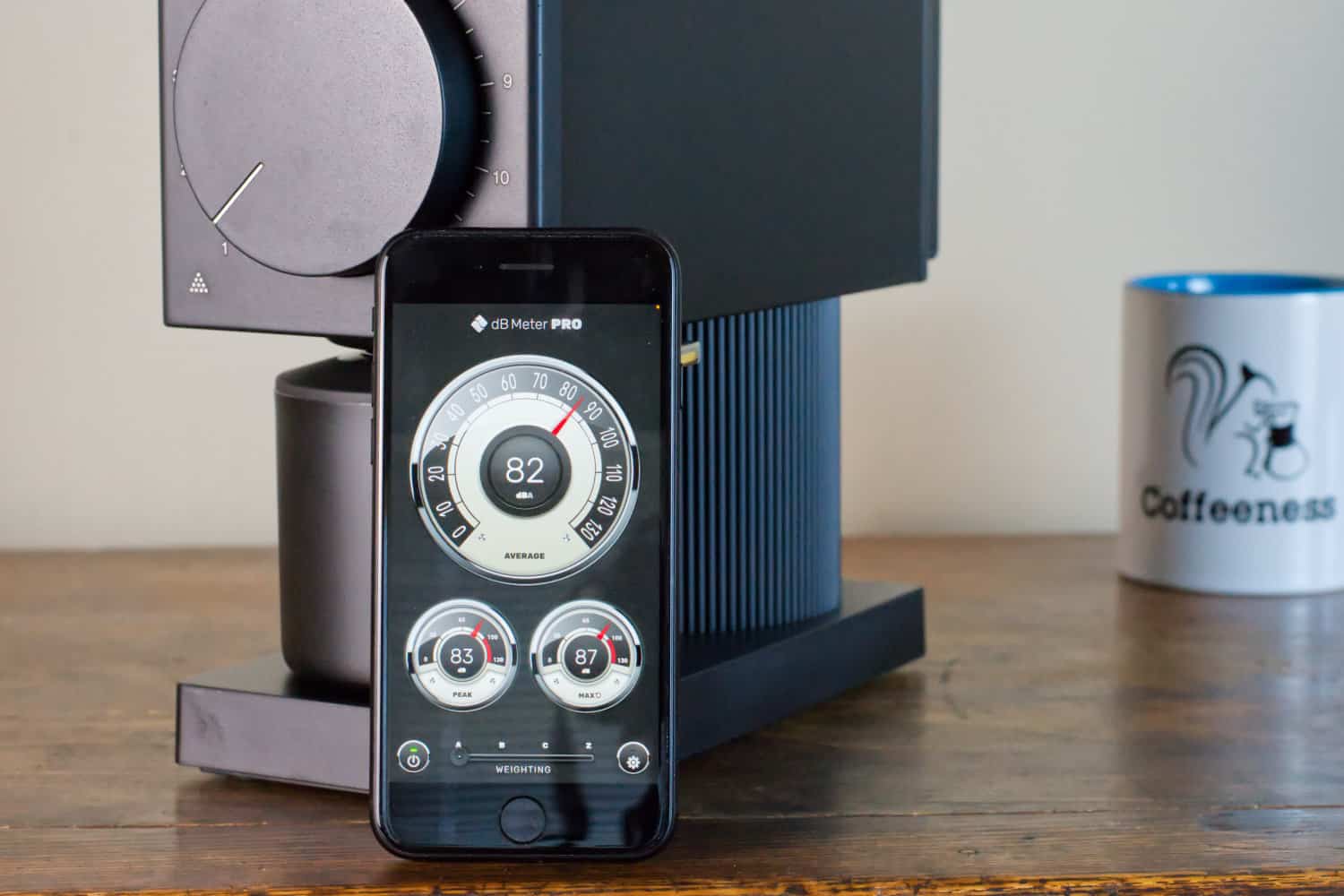
Let’s face it, coffee grinders are noisy. I mean, we are talking about a device that’s designed to pulverize coffee beans in a hurry! With that said, noise levels among grinders can vary quite substantially.
As you’d expect, the pricier the grinder, the quieter it’s likely to be. You’ll be paying for improved materials and more sophisticated soundproofing technology. Another thing to bear in mind is that conical burrs are often quieter than flat burrs. Still, that’s just a general rule of thumb and by no means always the case.
It almost goes without saying that a manual hand grinder is your best bet if noise is a major concern. Not only is there no motor to contend with, you can always go outside to grind beans in the morning!
The ABCs of Coffee Grinding Mechanisms
Let’s briefly revisit the coffee grinder mechanisms and why they’re important. For starters, the type of mechanism used in the design has a direct impact on the levels of heat generated. When you get down to it, the same requirements and material properties that I’m always jabbering on about with super automatic espresso machines apply here, too. But it’s worth going over again.
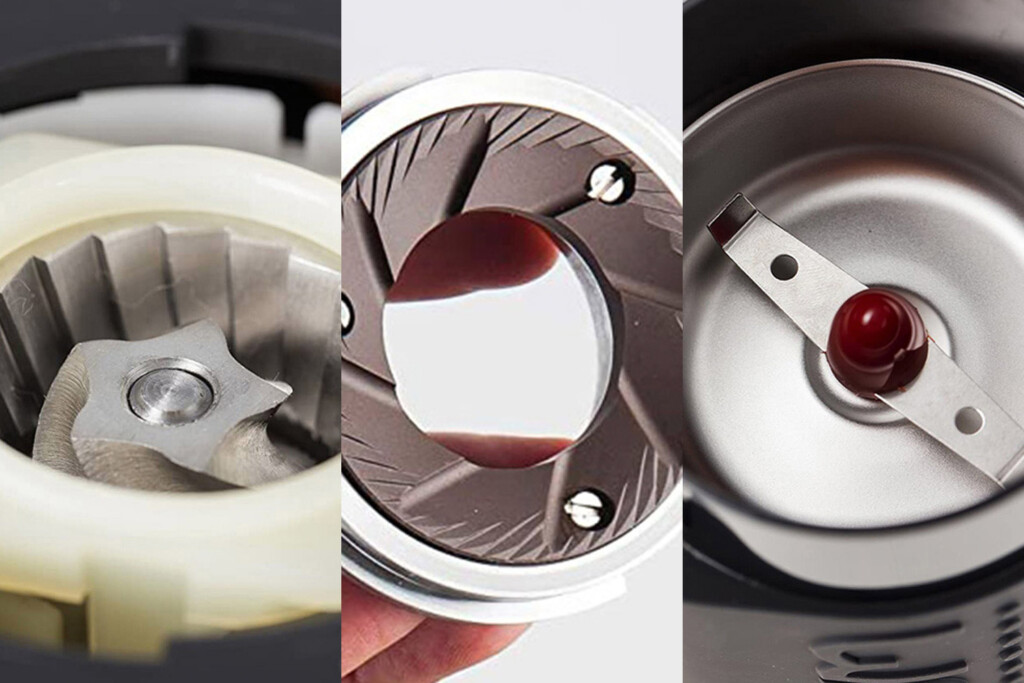
This style of grinding mechanism consists of two rings – usually with angled teeth – that lie flat on top of one another. The beans are crushed between the two rings. Moving the rings closer together or further apart adjusts the coffee grind size either finer or coarser.
Usually, a motor drives one of the concave burrs, while the other is fixed in place. Inside the burrs, centrifugal forces push the grounds outward, simultaneously grinding them finer until they drop through.
Pro baristas love this type of grind mechanism. Because when it’s built with the right caliber of components and workmanship, it produces highly consistent grounds and minimal heat. Just a heads up that those kinds of results also crucially depend on:
- Burr diameter
- The burrs achieving a high number of revolutions per minute (rpm)
Bigger burrs not only take longer to heat up but can also grind up more coffee beans at a time. Lazily turning burrs fail to meet the objective because longer grinding times mean they can’t beat the heat. Which brings us to the other downside of flat burrs: big burrs mean a bigger machine, especially if they’re driven by a motor.
Conical burr coffee grinders aren’t so very different from their flat burr cousins. But take a peek at the mechanism and you’ll see that the one burr nests inside the other. The coffee beans fall straight down as they pass from the wide end of the cone’s funnel and exit at the narrow end.
Since conical grinders tend to be more compact, there are a lot more options, both at the lower end of the price spectrum and in manual versions. You’ll hear a lot of people say that this setup requires less speed — rpm — to produce a quality grind.
They’re not wrong, but that’s alsonot always the case. Attach an under-powered motor to second-rate conical burrs and you’re guaranteed a bum grind. But the motor doesn’t need to be as high-end as is necessary for flat burrs, which is often the reason for the difference in price.
A downside to the design of — motorized — conical burr coffee grinders is that they often can’t be steplessly adjusted. The upside is they’re more likely to produce consistently small particles for espresso. The reason is that the coffee beans work their way down the full height of the cone, which often results in a finer grind than from a two-bit flat burr grinder.
From all my ifs and buts, it should be clear that no grinder mechanism is solely responsible for a superior grind. It’s a sum of many parts — the grinding mechanism, motor and machine design all have to work together.
Material choice is the subject of just as much musing — and ranting — as the grinding mechanism itself. Sure, metal has its disadvantages, but I like to take the middle road on this: both stainless steel and ceramic have their place.
Metal is obviously a better conductor of heat, which is why it’s all the more important that conical or flat burrs are made of the correct material to get the job done quickly. But I have to admit that steel has a durable robustness you’ve got to love. Metal mechanisms can be noisier, but with good insulation, you won’t even notice. In fact, it’s the quality of the sound that grates your nerves, rather than the decibel count.
As a case in point, my favorite grinder at the moment, the Baratza Sette 270 Wi, is a stainless steel conical burr grinder. If that’s an inferior material, you could’ve fooled me.
Manufacturers fall over themselves to proudly announce that their grinder has a ceramic mechanism. What’s the deal with that? Well, ceramic sounds more la-di-da and superior compared to the likes of ordinary old steel. Moving from emotional to more solidly rational grounds, ceramic is an extremely hard, smooth and neutral material that won’t impart any flavor. So theoretically, it’s a good choice for coffee bean aromas and fast grinding.
And you can’t argue with any of that. But ceramics are as weirdly paradoxical as diamonds. Like the gems, they’re hard enough to cut glass but so brittle they shatter when dropped. If your ceramic grinder suffers a serious knock, there’s every chance a burr will chip. I speak from experience. An undetected stone in a batch of beans damaged mine.
That’s not to say I’m anti ceramic burrs. I just don’t think they’re necessarily better than their stainless steel counterparts.
For the sake of completeness, I’m going to briefly touch on the blade grinders that are so plentiful in lower price brackets.
You’ll notice I’m NOT linking to any blade grinders because I really don’t think any of them are worth buying.
Why? Because a blade grinder is basically a blender in a different package. Nothing more. A pair of rotating blades chop randomly at coffee beans as they bounce off the container walls.
Some pieces are pulverized into fine powder, while others remain coarse. The opposite of a uniform grind, in other words. This is why you should steer clear of blades, whether in a coffee maker with grinder or standalone device.
Based on some of the comments I’ve read, there are actually people who grind their coffee and pepper in the same machine. Honestly, it leaves me scratching my head.
You won’t believe it, but I discovered my grandmother’s old blade grinder still floating around my parents’ house — a Krups Type309. I’ll say one thing for these machines: they’re practically indestructible. This old blade grinder must have worked its way through sacks of beans over the decades.
Tips for Adjusting Your Grind Settings
You’re not going to like this, but all things being equal, you should recalibrate your coffee grinder each time you open a new bag of coffee beans.
Think that sounds totally nuts? The thing is that the smallest variations in the roast or the bean surface affect what your coffee grinds look like.
You’ll notice this when, for instance, the new batch of beans suddenly comes out of the grinder chute faster or slower. Despite using the exact same settings, the grounds are actually coarser or finer.
This is just one of many reasons that I own several coffee bean grinders. I’m also not that keen on cleaning and resetting a machine with each new bag. How obsessive you get about this probably depends not only on the amount of money and space you have to play with, but also on your taste for experimentation.
For example, if you’re an equal opportunity coffee drinker who enjoys both portafilter espresso and java from a French press, two grinders are practically essential.
Does that feel like a stretch? I recommend a manual coffee grinder for the French press and an electric burr grinder to make life easier with the portafilter. That’s exactly what I do when reviewing different coffee beans.
Visual Reminders
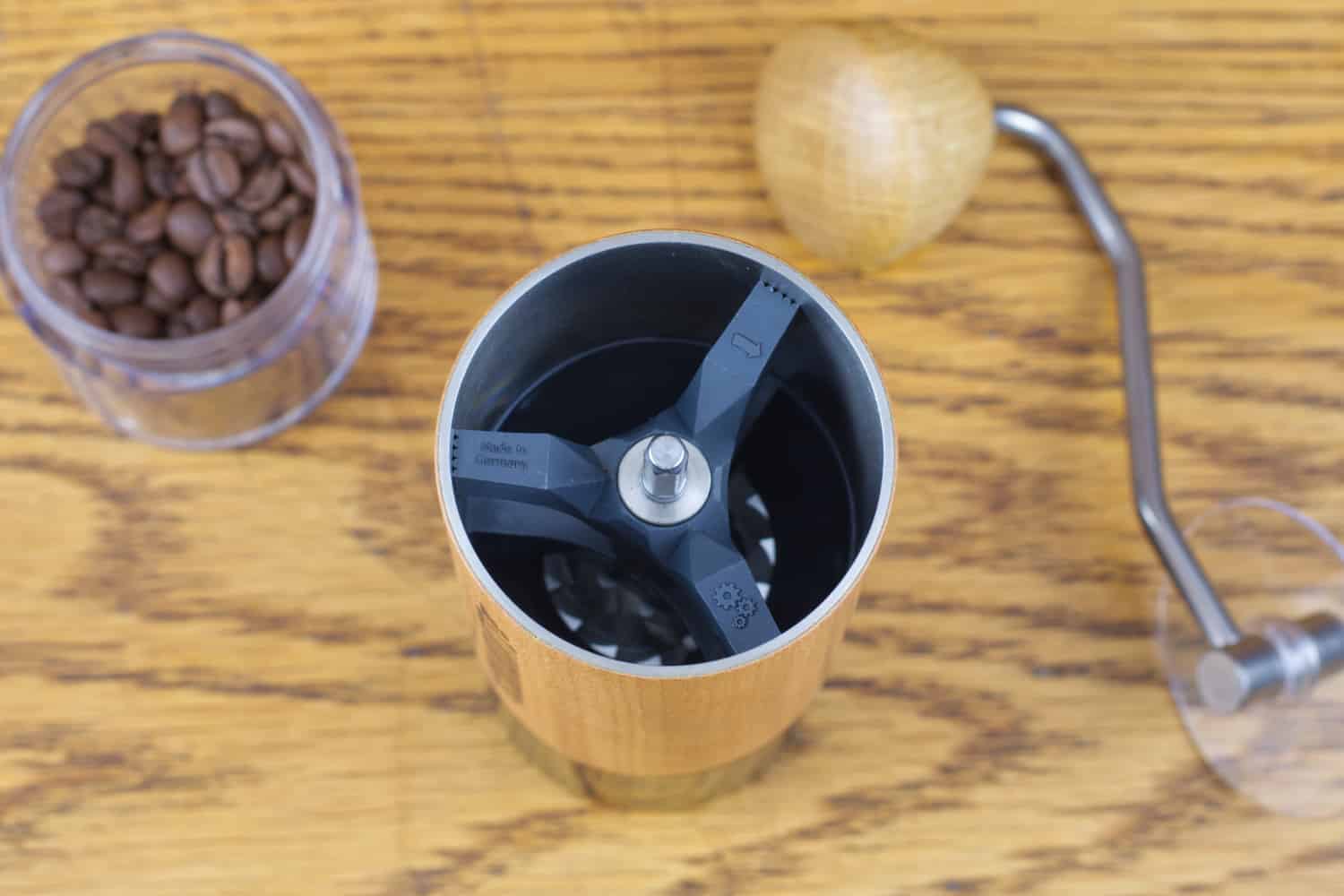
A word to the wise: Having some sort of visual reminder of roughly what your optimal settings are for each brewing method is essential. It’s just too easy to absentmindedly bump or adjust the dial or ring on a grinder. And then you have to start the whole calibration process from scratch. Been there, done that. So, take a photo or make a marking, and save yourself the headache.
Hitting on the perfect grind size takes time. And since that varies from one brewing method to the next, I’ll give you a few tips to help you get there a bit faster.
But first, a very important point when adjusting any motorized grinder:
Always adjust the grind settings while the machine is running to prevent the burrs jamming. And remember that you’ll need to purge any coffee left in the burr chamber before the change becomes apparent. Take a good look at what comes out of the grinder — you should be able to spot the most subtle of changes to the consistency.
So, here’s an inconvenient but unavoidable truth: you can only tell if the grinder settings are spot-on after the coffee lands in your cup and you’ve tasted it. With espresso, of course, you get an early heads-up thanks to the flow rate and crema.
For Drip Coffee
Since your drip coffee maker needs a medium grind, the logical place to start on any grinder is slap bang in the middle of the scale.
If you’re lucky enough to land on the sweet spot straight away, your brew will have just the right amount of body. Depending on the roast, it could range from amber to burnt honey in color. As for the rate that the brew filters into the pot, you’re looking for a steady flow but not a deluge.
Coffee that gushes through indicates the grind is too coarse. If you’ve moistened and bloomed the grounds but there’s barely a trickle when the rest of the water is poured over, it’s too fine. Overly bitter or acidic manual pour-over coffee is the result of a grind that’s — unintentionally — too fine.
For Espresso
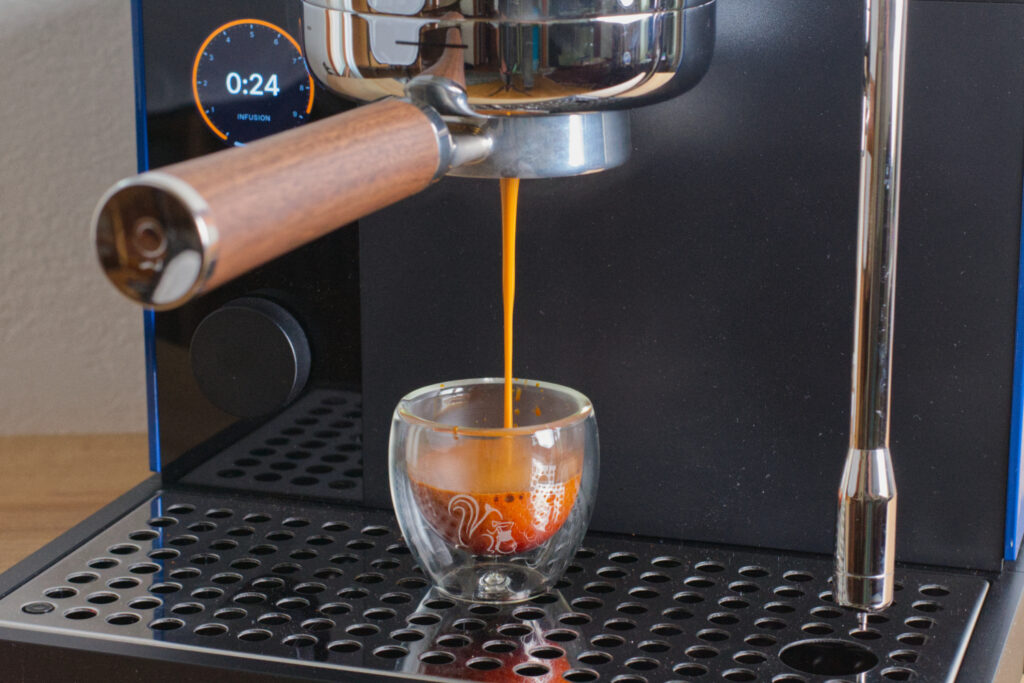
Spotting a perfect espresso in the cup is easy, but nailing the grind to produce it isn’t so simple. Remember that a suitably fine grind needn’t necessarily be your grinder’s lowest possible setting.
This is where the difference between the best burr coffee grinder and the things built into super automatic espresso machines becomes painfully apparent. Despite always maxing out a super automatic grinder to its finest setting, I’m often disappointed to find that it’s still too coarse.
You can tell if a coffee grinder is set too fine when the granules leave the chute sluggishly in great lumps that plop down with big pauses between. While this isn’t necessarily a serious issue for the grinder, it is going to be for the espresso you try to make.
How To Spot Excessively Fine Grinds
There are two ways to spot an excessively fine grind in the portafilter: first, the espresso drips into the cup at a slow trickle. Second, the crema is very dark and uneven. Take a sip; you won’t be able to miss the blast of bitterness and how totally off the flavor profile is.
How To Spot Overly Coarse Grinds
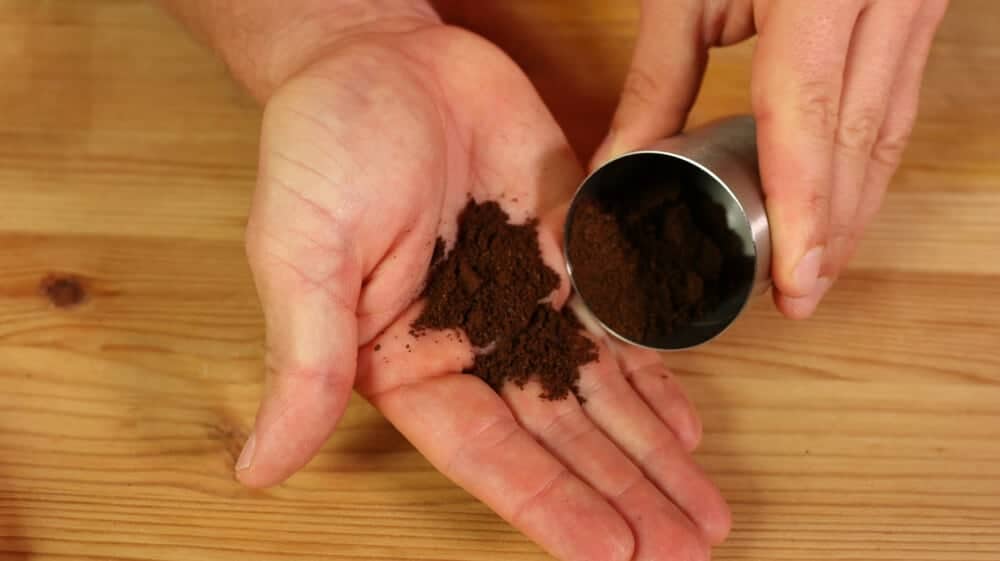
When the grind is too coarse, both the granules and brew will make far too rapid of an exit from their respective machines. A very clear, strong jet of coffee is an unequivocal sign of under-extraction — and an excessively coarse grind. The coffee will be horribly pale and thin with virtually no crema.
Adjusting the grind size in the smallest possible increments is even more critical with espresso than with other brewing methods. If you have a stepless coffee grinder, you should just edge the dial over slightly with a thumb or finger. Unless of course, the settings are completely missing the mark.
From there, you just have to keep working through the cycle of adjusting the grind, checking the dose, pulling a shot, tasting and then going back to tweaking the grind. It’s that easy.
With that in mind, you’re probably starting to see the method to my madness when I recommend using several grinders, and why I generally prefer a hand coffee grinder for testing several different coffees.
How to Clean a Coffee Grinder
No water means no problems with moldy coffee residues, right? Not quite. Sure, there’s less risk of the Petri dish effect with a grinder than, for instance, a coffee machine with grinder or even a super automatic espresso machine.
But coffee beans are oily little critters. And given enough time, oil goes rancid. Yuck!
That’s why you also need to clean coffee bean grinders. But it’s pretty easy to do so. There are two basic cleaning rituals for coffee grinders:
Running coffee grinding cycles with special cleaning granules. I recommend using Urnex Grindz
Disassembly and vacuuming. The Brigii Mini Vacuum is perfect for this!
I perform the second task once a week. Those of you who don’t use your grinders as often can extend the interval — but only by a little! Honestly, it’s child’s play to take apart a coffee grinder.
That’s because one of the two — conical or flat — burrs has to move anyway. So it’s not difficult to remove it by hand from the chamber by following the instructions in the user manual. Once you’ve done that, you can clean the rest of the grinder with a vacuum cleaner and scrub the removed burr again with a cleaning brush. That’s basically all there is to it. Done and dusted.
Often the coffee bean hopper doesn’t get the attention it deserves. The problem is this is where oils build up the fastest. Depending on the extent of the residue, a gentle wipe down might not do the trick. Remove the hopper and empty it out. Then, clean it by hand with food-grade soap and allow it to dry well before reattaching it.
Verdict: Which Burr Coffee Grinder Will You Choose?
If you’ve made it this far, congratulations are in order. You can now consider yourself a burr coffee grinder expert!
Whether you’re making the switch from using pre-ground coffee or upgrading from a tired old blade grinder, your coffee-making future looks bright. Seriously, I can’t overstate how much a good burr coffee grinder will change your life!

I can only hope you found the best burr coffee grinder for your needs in this guide. Heck, maybe I even convinced you that there’s nothing weird about owning multiple grinders.
Feel free to bookmark this page so you can jump back in if you need a refresher. Plus, I’ll be updating this guide from time to time, so check back every once in a while.
Methodology & Criteria: How We Tested
I’ve tested dozens of burr coffee grinders in the Coffeeness kitchen. Every time I embark on a new review, I make sure to spend several sessions putting the coffee grinder through its paces. My aim is always to provide you with an honest assessment. So, I’ll use the grinder for a wide range of brew methods, particularly if the manufacturer markets it as an all-rounder. And I’m never afraid to criticize a model that doesn’t cut the mustard.
Here’s a selection of the criteria I adhere to when testing a burr coffee grinder:
Grind quality: Rather than focus on the number of grind settings, I pay close attention to grind consistency across the available spectrum. I grind a lot of coffee, assessing particle size uniformity and distribution for a range of brew methods.
Consistency: I take note of consistency across grind cycles, carefully weighing each dose and taking note of any irregularities.
Build quality: I always pay special attention to a grinder’s build quality and the materials used. During testing, I also assess the grinder’s durability. Over several sessions, I take note of any flaws in the design which may result in static buildup and retention issues.
Ease of use: I make sure to approach every model as a beginner might. I pay special attention to the ease of which it’s possible to make grind adjustments as well as how intuitive the user interface is.
Special features: Depending on the specific model, there may be a slew of special features, including timer functions, micro-adjustment mechanisms and grind-by-weight functions. I test everything to see whether or not it adds value to the grinder.
Cleaning and maintenance: During cleanup, I always attempt to remove the burrs and bean hopper. I award extra points to grinders with easy access to the burr chamber and dispensing chute.
Cleaning and maintenance: During cleanup, I always attempt to remove the burrs and bean hopper. I award extra points to grinders with easy access to the burr chamber and dispensing chute.
Price/performance ratio: This is always at the forefront of my mind as I’m testing a coffee grinder for home use. Is the asking price fair for what’s on offer? I award extra points for a model that goes above and beyond what I’d expect at any given price point.
Updated: 28. May 2026
We updated our list by switching out some models. We also refreshed the text throughout.
More updates
24. February 2025
12. September 2024
We replaced the Baratza Encore with the Encore ESP for Best Mid-Range Grinder.
18. March 2024
Close
Your coffee expert
Arne Preuss
Hi! My name is Arne. Having spent years working as a barista I'm now on a mission to bring more good coffee to the people. To that end, my team and I provide you with a broad knowledge base on the subject of coffee.
Hi! My name is Arne. Having spent years working as a barista I'm now on a mission to bring more good coffee to the people. To that end, my team and I provide you with a broad knowledge base on the subject of coffee.